

Russian Olive
Elaeagnus angustifolia
Class C
Widespread in the state. Management decisions for these species should be determined at the local level, based on feasibility of control and level of infestation.
Riparian Threat
This plant is known to invade riparian areas or otherwise damage the health and abundance of our water resources.
Children & Pets
This plant may pose a particular risk to unsupervised children and animals due to its toxicity or potential for injury.
Local Ecosystems
This plant is detrimental to native ecosystems, negatively impacting the quality of forage for wildlife and reducing biodiversity in plant communities.
Livestock Hazard
This plant presents a threat to the health and/or quality of livestock.
QUICK FACTS
- Brought to North America for windbreaks, erosion control, and ornamentals, Russian olive has escaped cultivation and now displaces native shrubs and trees across western and interior regions.
- It tolerates poor, saline, and disturbed soils, fixes nitrogen, produces abundant seeds that wildlife and water disperse, and forms dense thickets that alter riparian structure and reduce biodiversity.
- Russian olive may be available for purchase in your area, so avoid planting it and remove young plants early. Established stands require repeated control and restoration with native vegetation for sites to recover.
1. Overview
It arrived quietly, borne by good intentions, and was planted for shade, shelter, and beauty. But beneath its shimmering canopy, the Russian olive spreads with relentless determination, outcompeting native vegetation, altering waterways, and transforming entire landscapes.
Russian olive is a fast‑growing tree introduced to North America for windbreaks, erosion control, and ornamental planting. Over time, it has spread far beyond its intended use, establishing dense stands along rivers, wetlands, and open rangeland. Its ability to thrive in poor soils, fix nitrogen, produce abundant seeds, and outcompete native vegetation enables it to dominate quickly. As these thickets expand, they alter wildlife habitat, reduce biodiversity, and change the structure and function of riparian ecosystems. Today, Russian olive is recognized as an invasive species in many western states, prompting coordinated efforts to manage its spread and restore native plant communities. [1,2,4]
History of Russian Olive
This tree was introduced to North America during colonial times, and by the early 1900s, it was valued for windbreaks and erosion control. In the early 1900s, this plant was deliberately and extensively planted as a windbreak in association with government programs following the Dust Bowl. The first case of Russian olive escaping cultivation was in 1924 in Utah, and by 1954, it had escaped cultivation in all adjacent states. As recently as 1990, Russian olive seedlings were still being subsidized by some federal and state agencies in the U.S. and Canada. Today, it is still promoted as an ornamental shade tree. [1,5,6]
2. ID Guide
What does it look like?
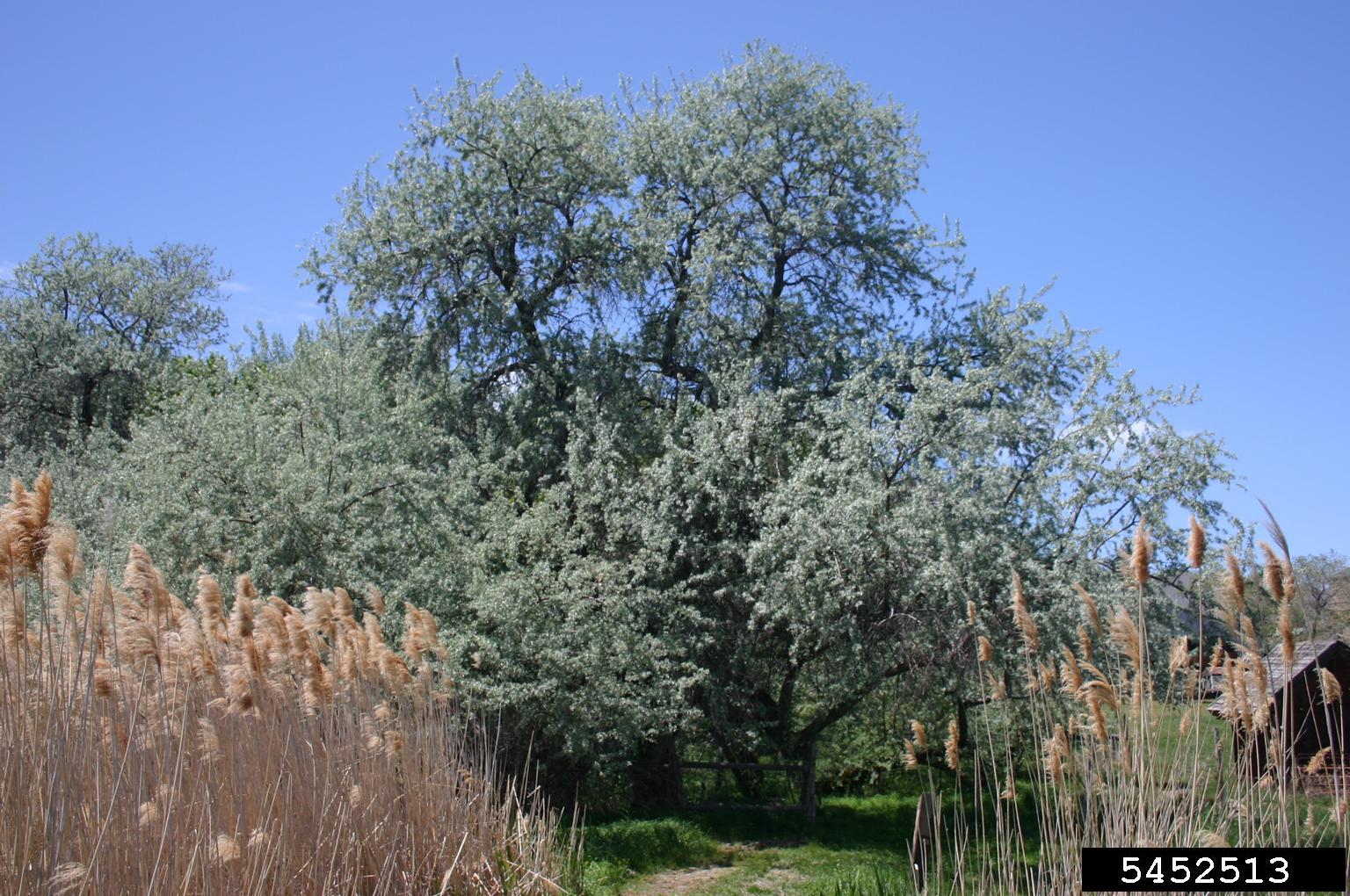
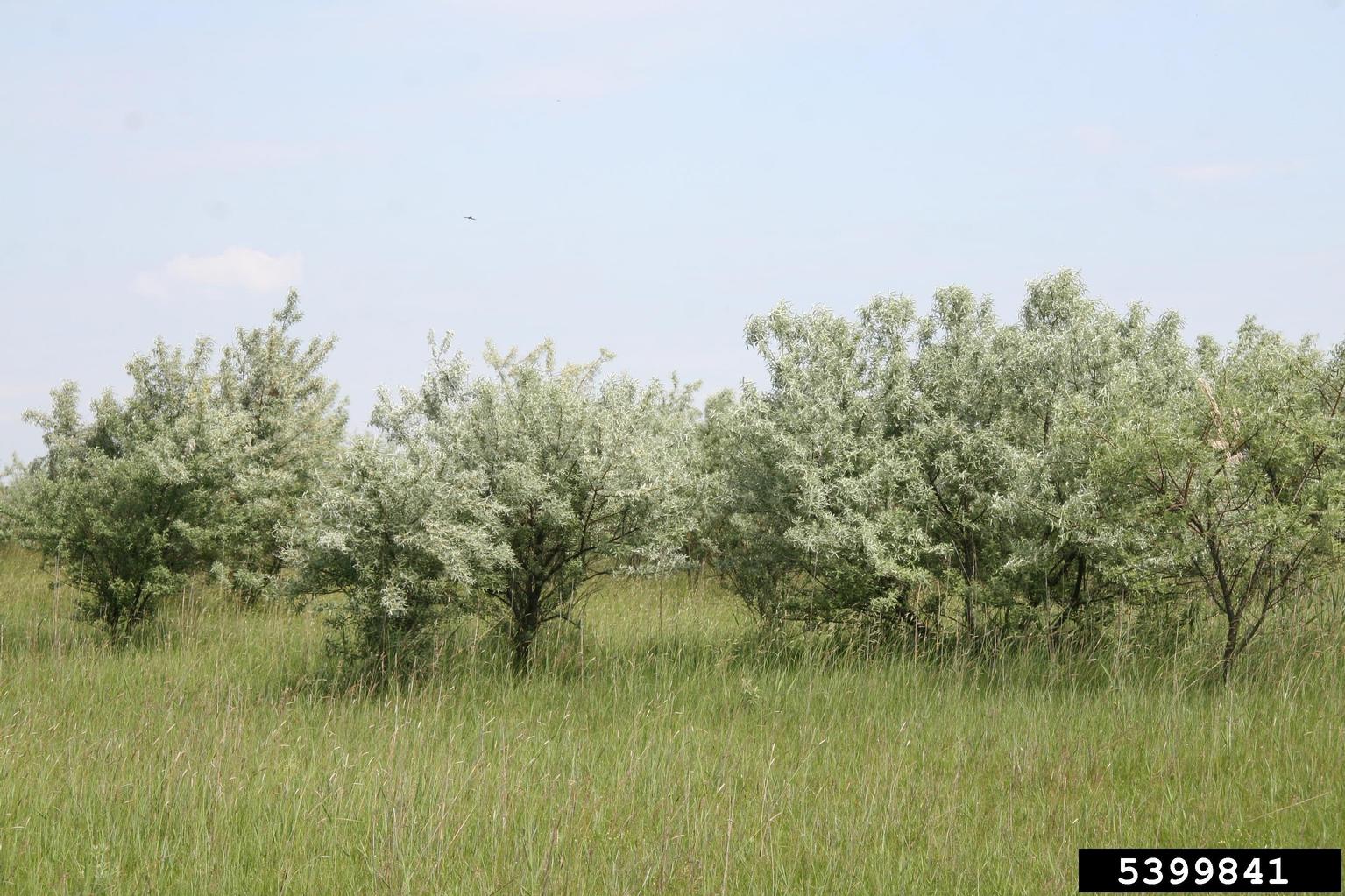
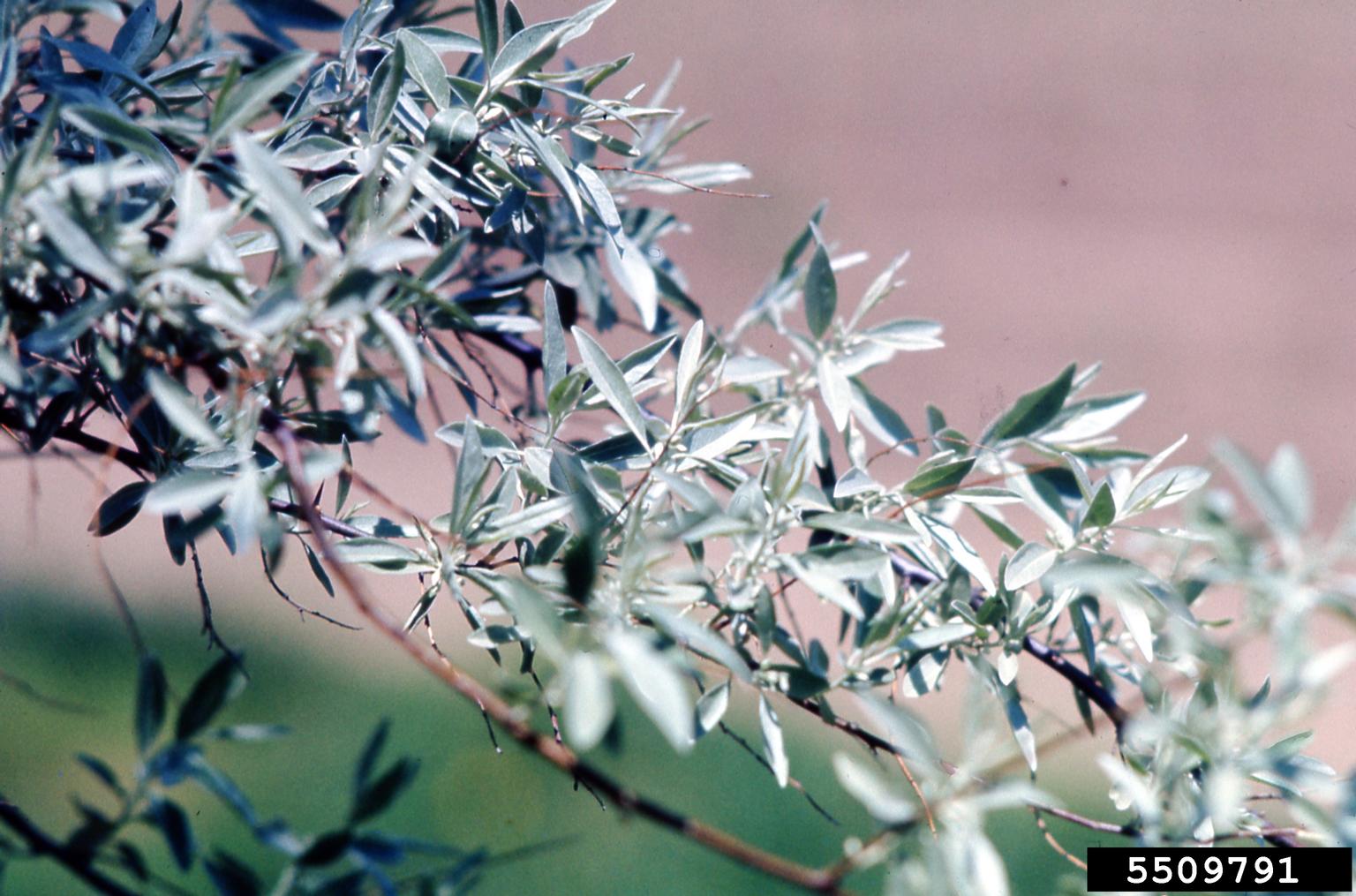
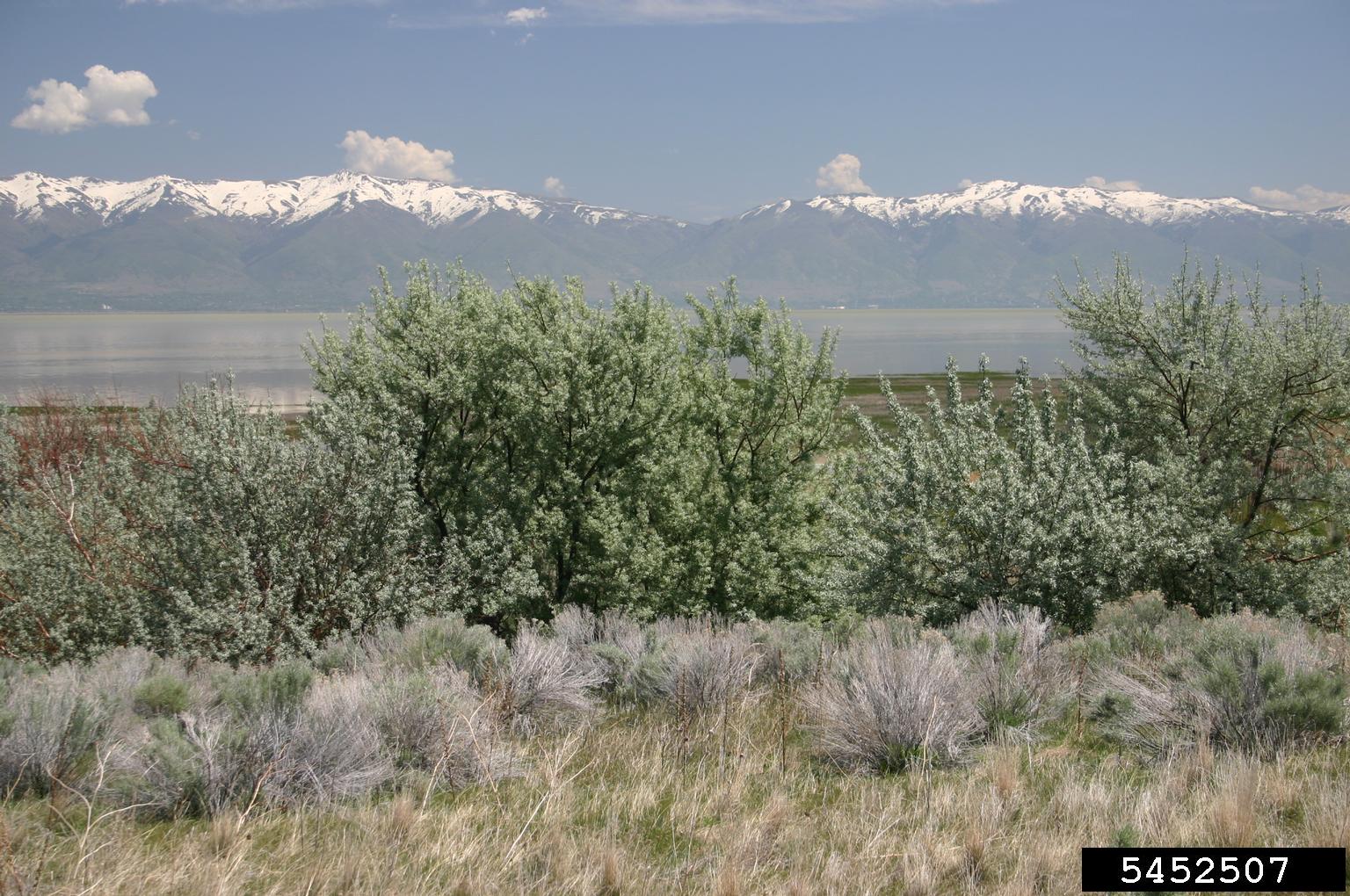
Russian olive is a fast-growing tree that can usually be distinguished in a group by its silvery-gray/green foliage. In ideal conditions, Russian olive can reach 45 feet, but in most cases it appears as a relatively short, bushy tree less than 20 feet tall. In New Mexico, be careful not to misidentify Russian olive, as it closely resembles both silverberry and buffaloberry. These plants are native to North America and are characterized by their shorter stature and opposite-leaf arrangement. Buffaloberry produces bright red fruit, and young silverberry stems are much darker brown than those of Russian olive. [3,4,6,7]
Having trouble identifying a weed?
Contact your local conservation district or county extension agent.
Key Features
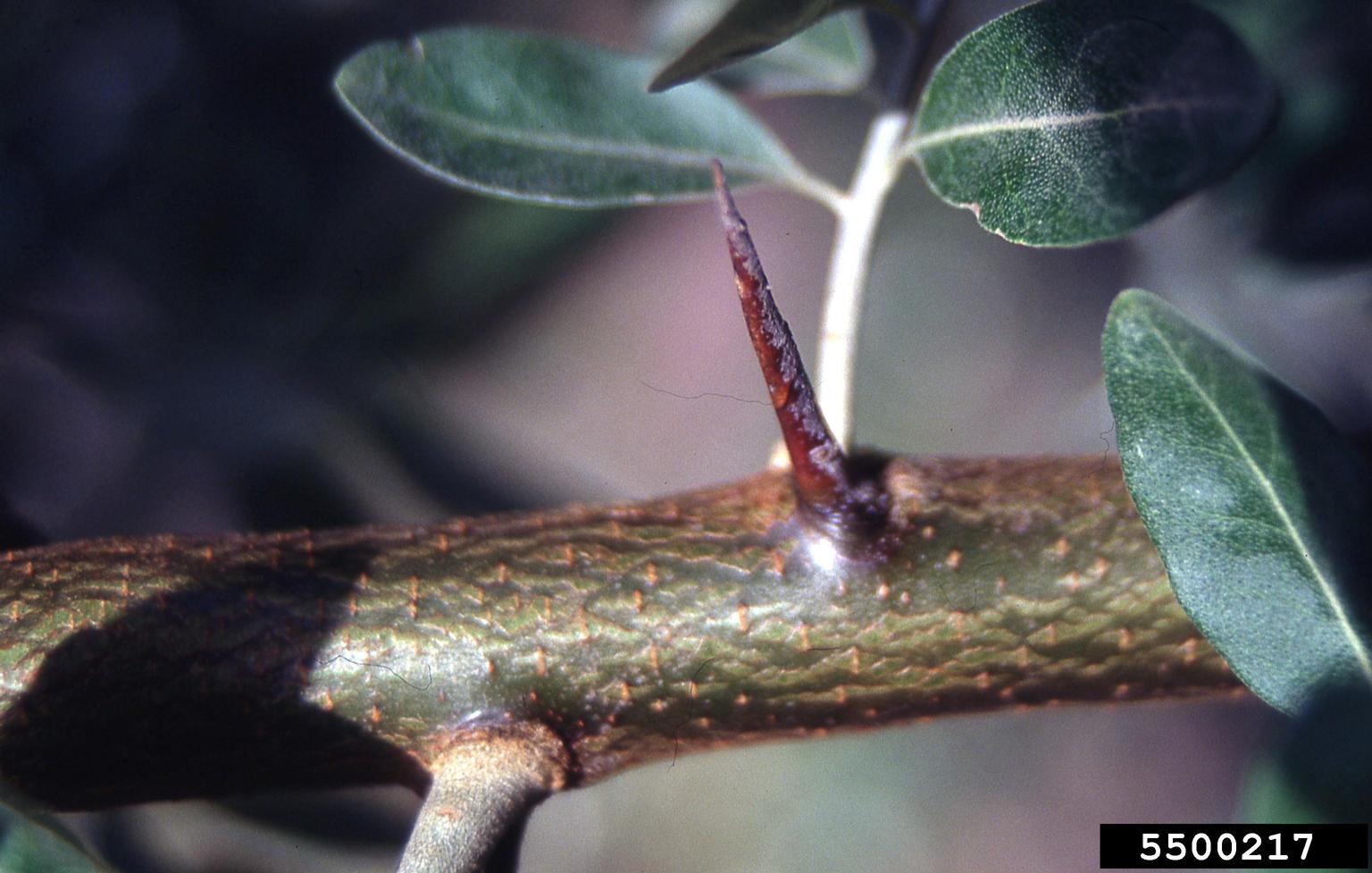
- Plant: This is a woody species with a framework of thick, aging stems and younger, slender shoots. Stems have very sharp, stout spines that can be 1-2 inches long. The bark surface has a rough, fibrous texture, while newer growth appears smoother and lighter. Branches spread outward in multiple directions, creating a dense, layered structure that often forms a thicket‑like mass. The overall form tends to be irregular, with many small twigs extending from the main limbs. [2]
- Roots: A sprawling root system spreads close to the soil surface, but also sends down deeper anchoring roots. [7]
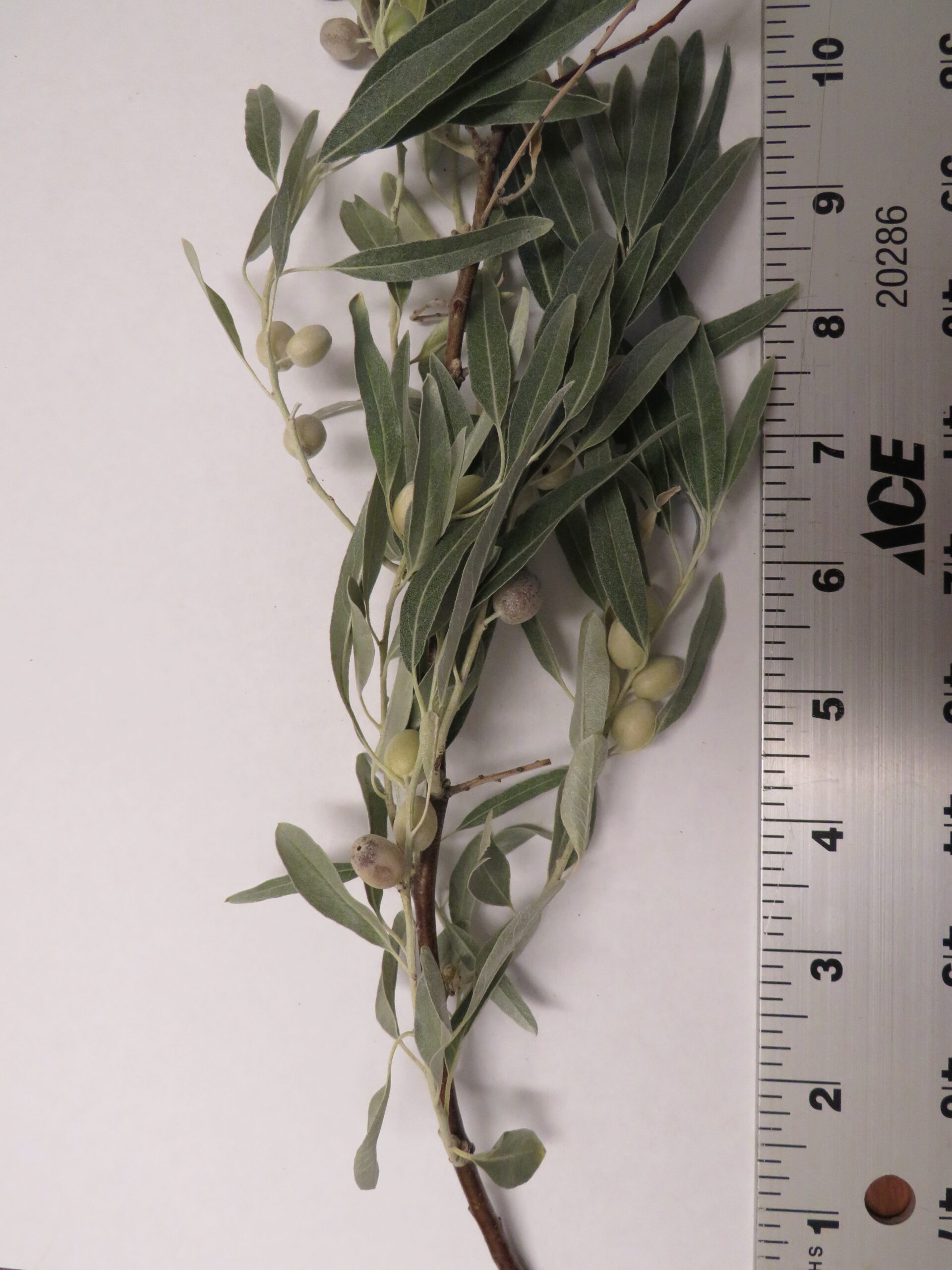
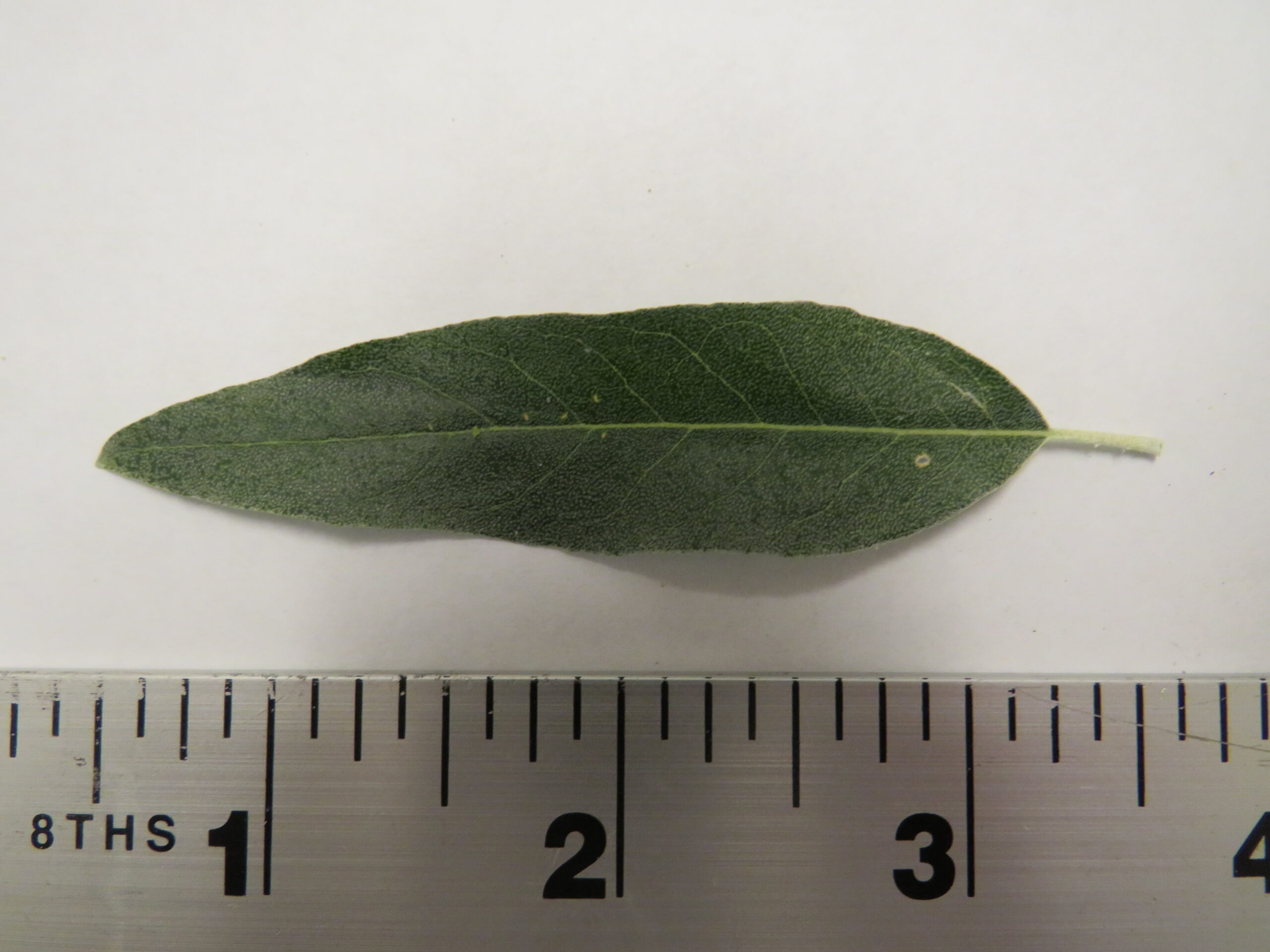
- Leaves: Leaves are arranged in an alternating pattern along the stems and have a narrow, lance‑like to softly elliptical form. Their edges are smooth, and the upper surface shows a muted gray‑green tone with a light covering of silvery, star‑shaped hairs and scales. The petioles and the underside of each leaf display a silvery gray color and a dense layer of silvery, shield‑like scales. [2,3]
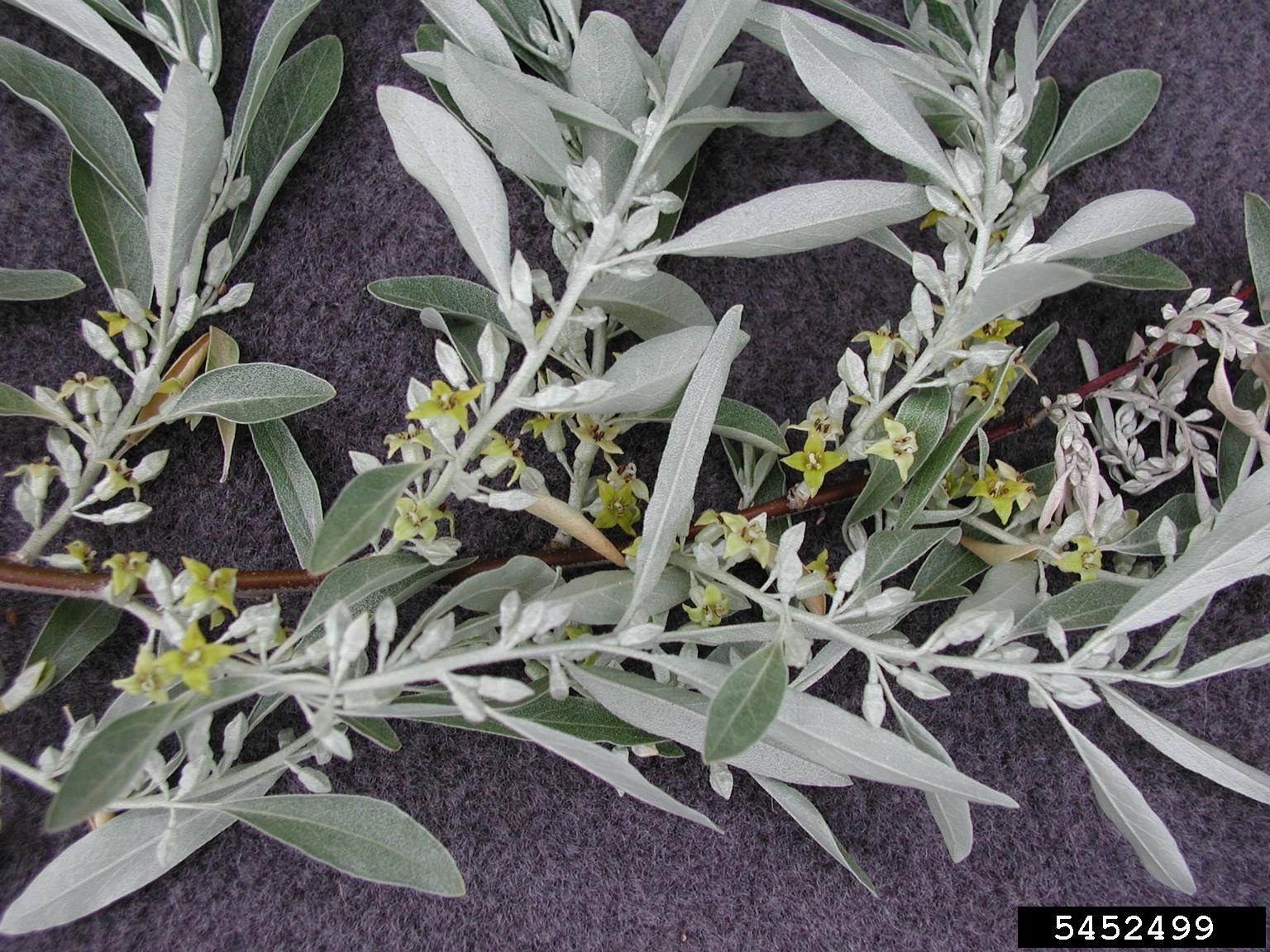
- Flowers: Clusters of blossoms form at the points where leaves meet the stems, with each cluster containing one or more flowers. The flowers are small, yellow to yellow‑green, and intensely fragrant. They have no true petals, instead showing four sepal‑like structures along with four stamens. Blooming occurs from May through June. [2,3]
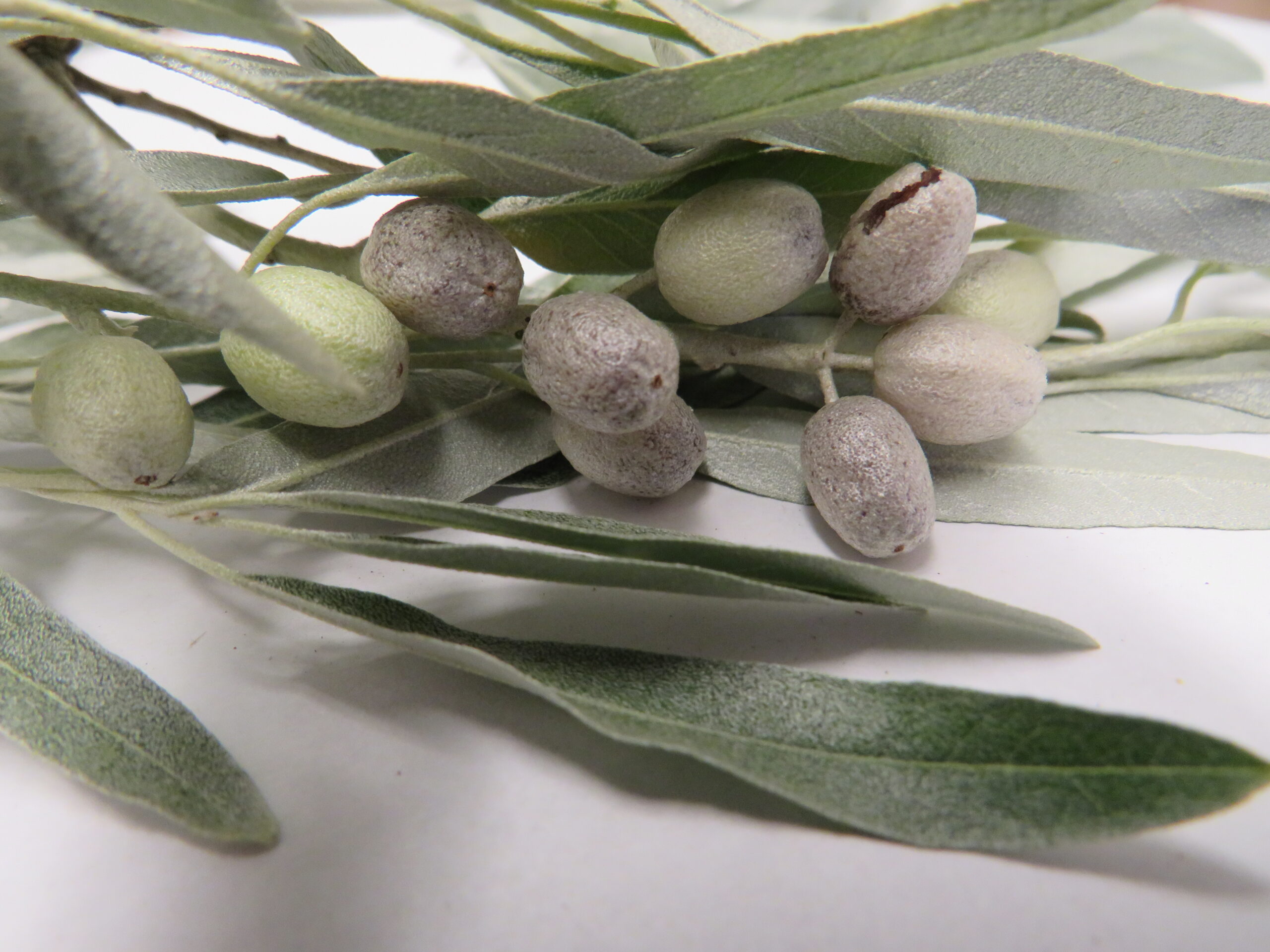
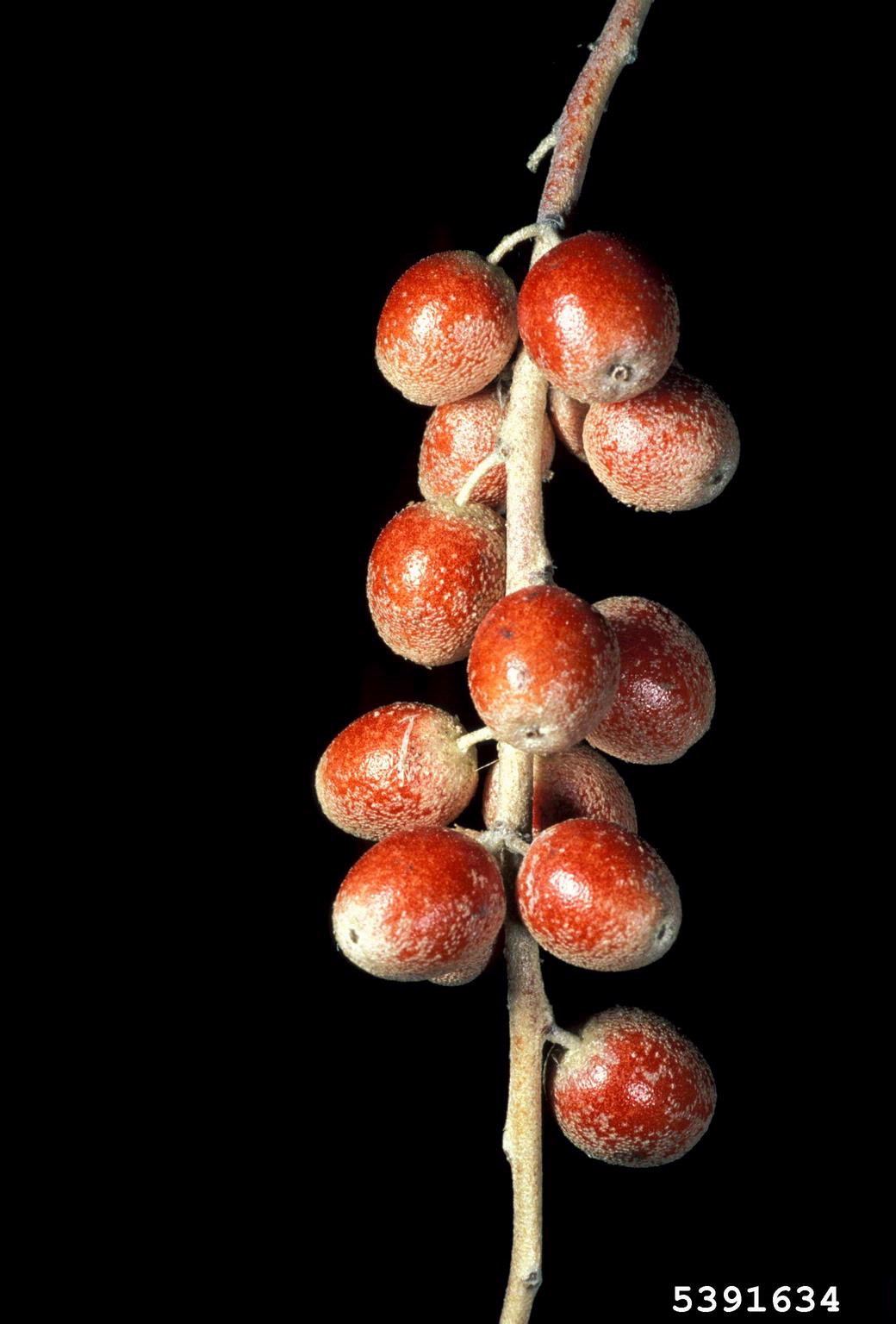
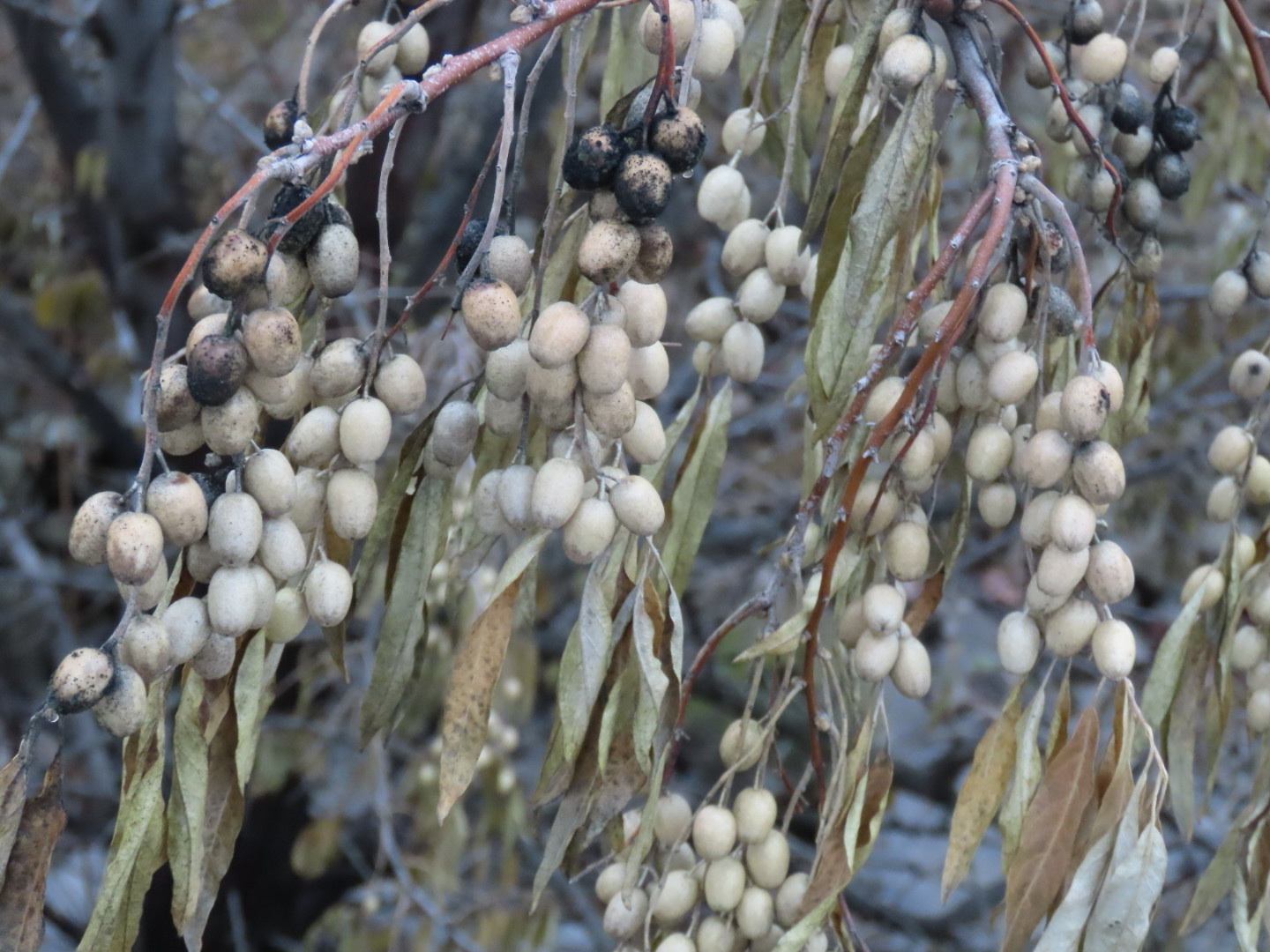
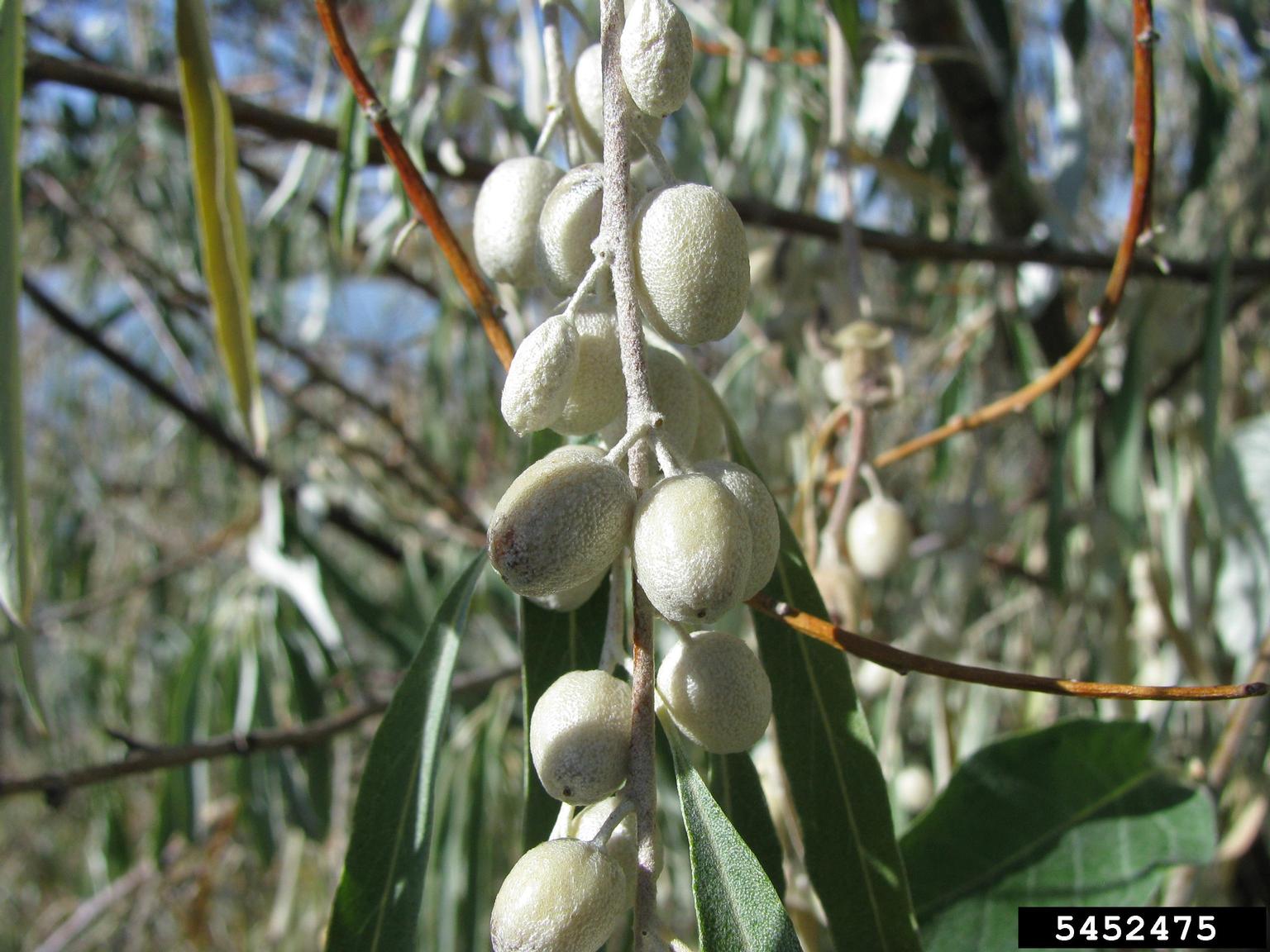
- Seeds: Fruits are oval and contain a single seed, resembling a small drupe. Their surface is coated in silvery scales, giving them a gray appearance that shifts to brown as they dry. [2,3]
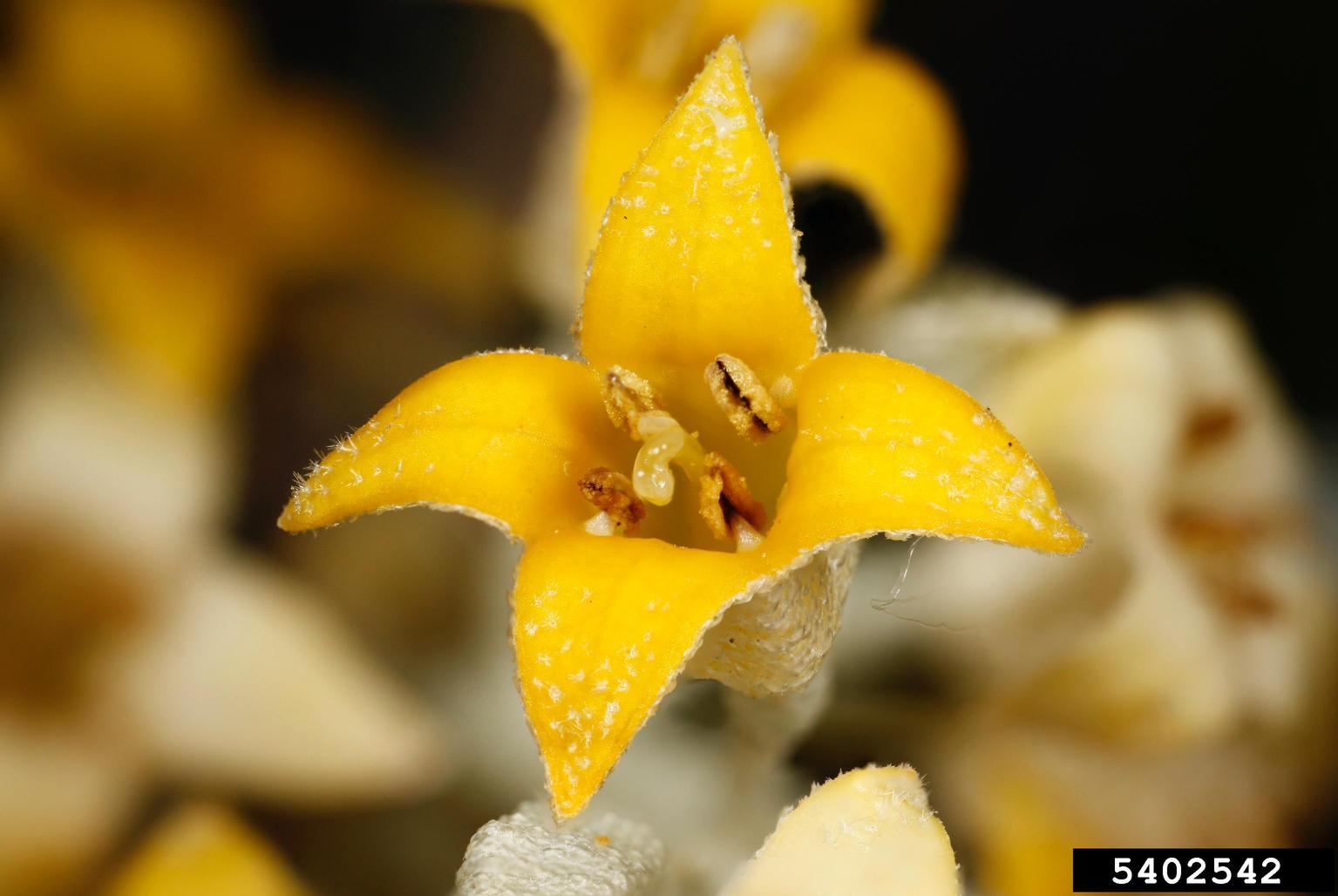
Joseph Berger, Bugwood.org
The flowers are small, yellow to yellow‑green, and intensely fragrant.
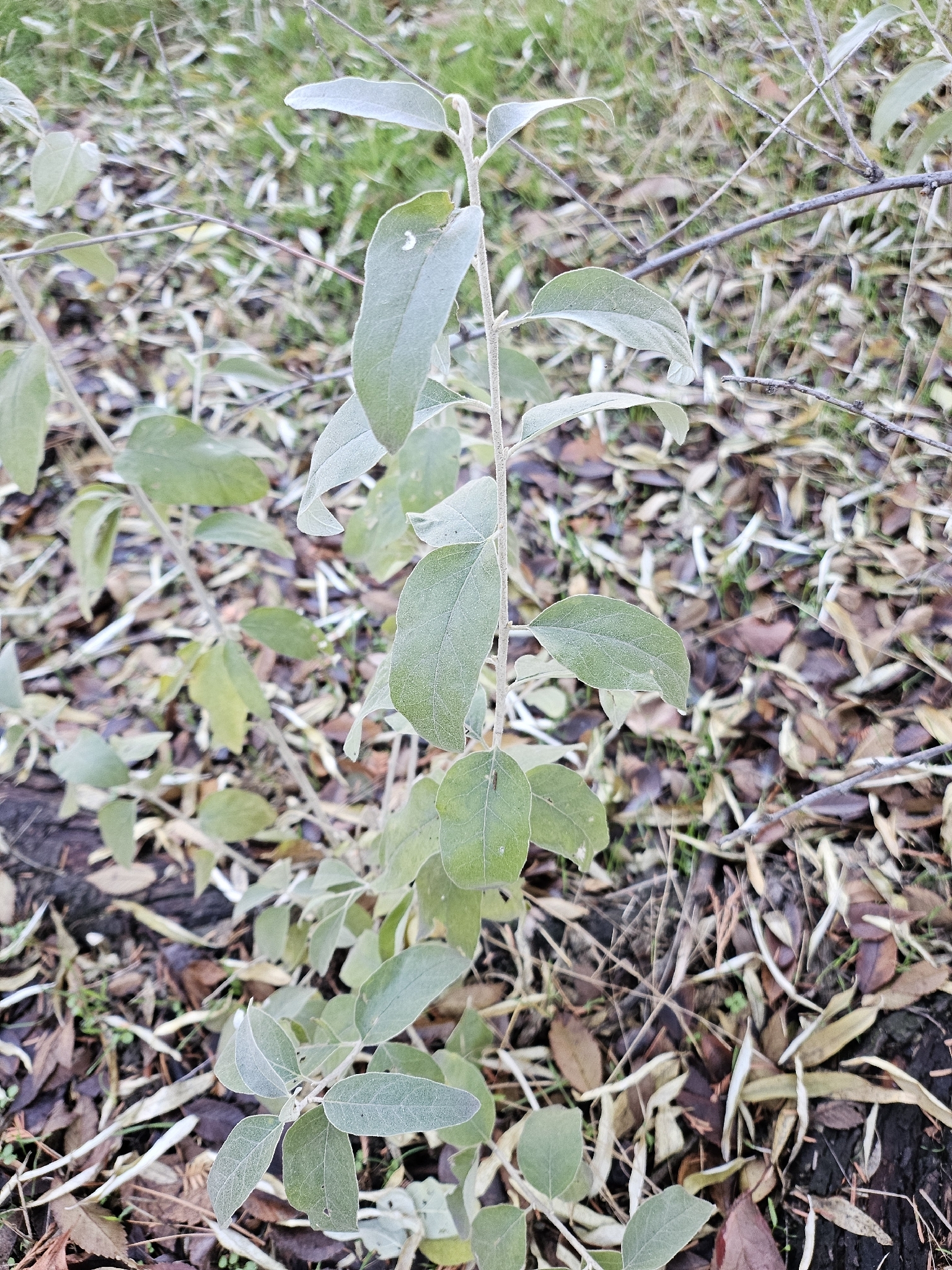
leaf it better, inaturalist.org
Fertile root structures that enable rapid regeneration after disturbance.
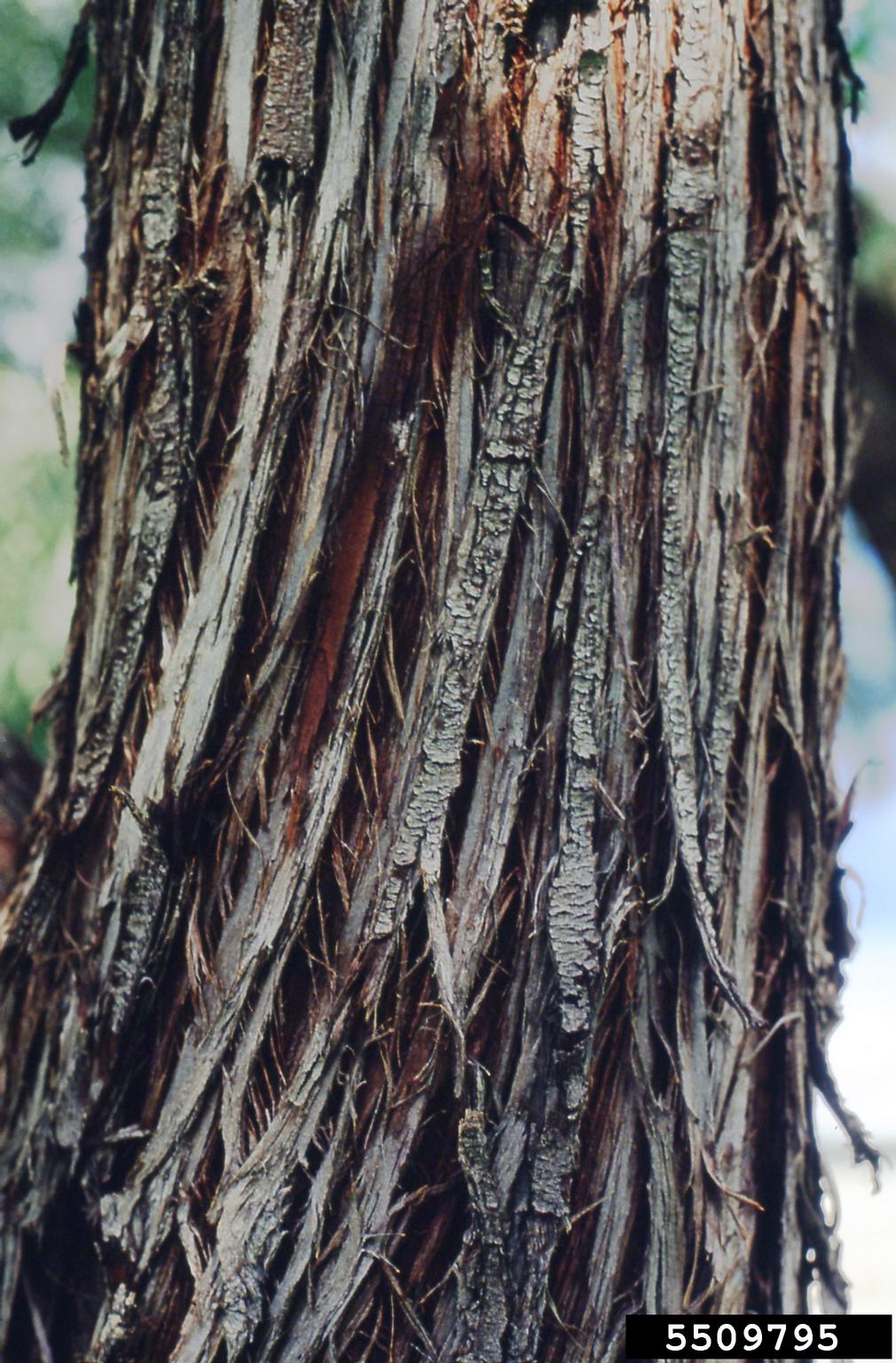
T. Davis Sydnor, The Ohio State University, Bugwood.org
The bark surface has a rough, fibrous texture, while newer growth appears smoother and lighter.
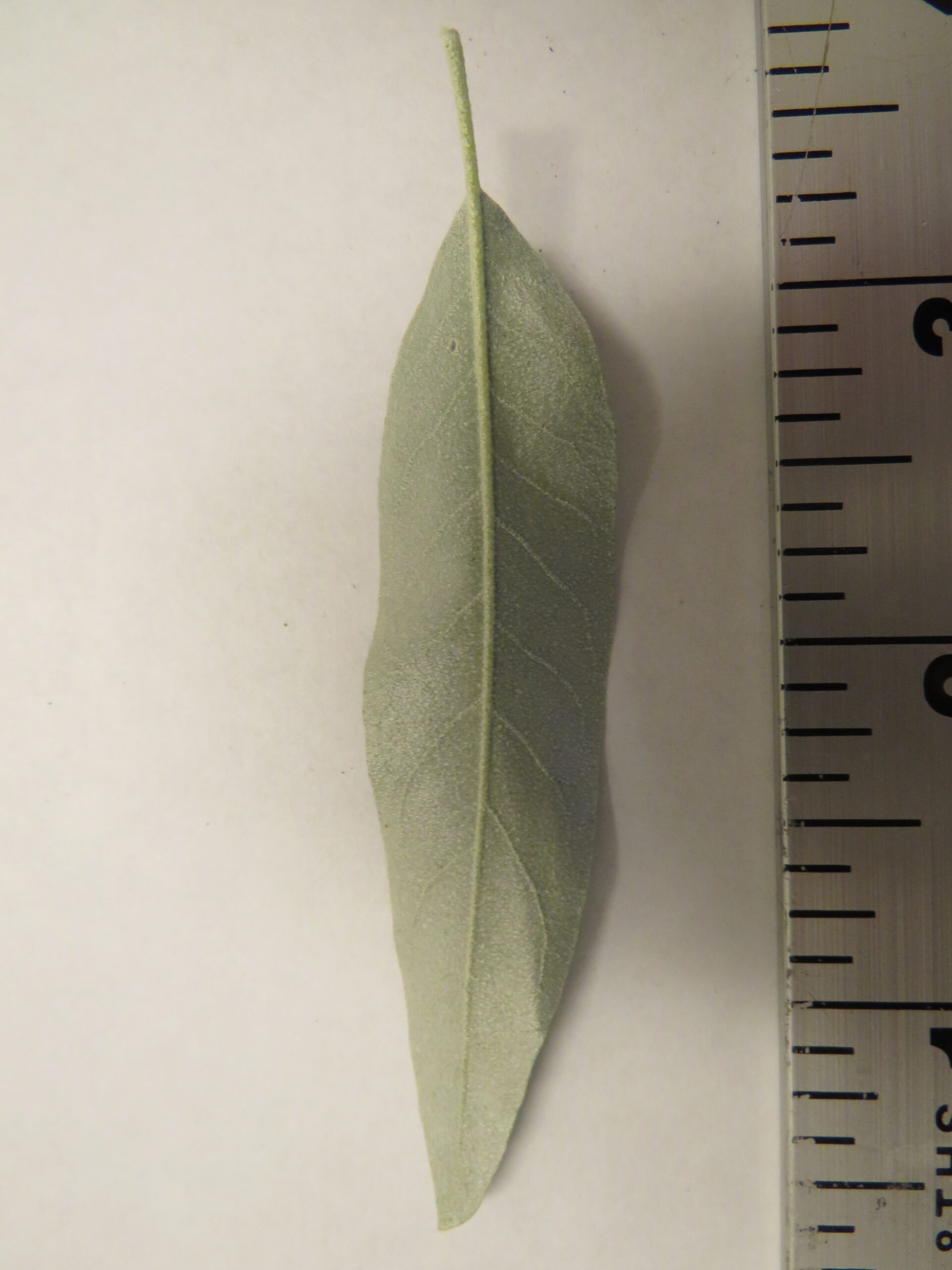
Mikhial Parison, Taos Soil & Water Conservation District
The petioles and the underside of each leaf display a silvery gray color and a dense layer of silvery, shield‑like scales.
Leslie J. Mehrhoff, University of Connecticut, Bugwood.org
Russian olive can reach 45 feet, but in most cases it appears as a relatively short, bushy tree less than 20 feet tall.
Mikhial Parison, Taos Soil & Water Conservation District
The fruit surface is coated in silvery scales, giving them a gray appearance that shifts to brown as they dry.
3. Infestation Basics
“With traits including high shade tolerance and a symbiotic association with nitrogen-fixing bacteria, Russian-olive has the potential to dominate riparian vegetation and thus radically transform riparian ecosystems.”
– Liana K. D. Collette and Jason Pither
Where does it grow, and how does it spread?
Russian olive has become widely established across the interior and western United States, especially along riparian corridors, floodplains, roadsides, irrigation ditches, and other disturbed sites from the Great Plains into the Intermountain West and Pacific Northwest. [6]
Russian olive is reported in New Mexico, Colorado, Washington, Wyoming, Montana, Nevada, and many neighboring states. It readily colonizes streambanks, irrigation channels, floodplains, and disturbed uplands. Adapted to harsh environments, it tolerates a wide range of soils, including saline or alkaline sites common in arid and semi‑arid regions up to 8,000 feet. [1,6]
Seeds are dispersed primarily by birds and mammals that eat the small fruits (The seed coats are unaffected by digestive fluids), and by flowing water that carries seeds downstream to colonize new riparian reaches. Human planting for windbreaks, erosion control, and ornamentals has historically introduced the noxious tree, and continues to be a seed source for spread. Established populations build a persistent seed bank and fertile root structures that enable rapid regeneration after disturbance. [6]
Key takeaway: Do not plant Russian olive for ornamental purposes or otherwise. Remove young seedlings before they fruit. Limit wildlife access to fruiting plants near waterways, and restore native riparian vegetation and bank stability to reduce open niches that favor Russian olive establishment.
Why is it so invasive?
Russian olive is invasive because it produces abundant, attractive fruit for select wildlife, while reducing food sources for more species than it helps. It also uses excessive amounts of water, lowering the water table and reducing access to water for native riparian plants like cottonwood. [4,6]
The species produces large numbers of palatable fruits that attract birds and mammals, which disperse seed long distances into riparian and upland habitats alike. It also tolerates drought, saline and alkaline soils, compacted or disturbed ground, and a wide range of moisture regimes, so it readily grows in exposed soils after floods or other disturbances. Russian olive grows quickly and forms dense thickets that shade and crowd out native plants. [6]
These trees severely alter native plant communities by overconsumption of water. Several factors slow down the restorative transition from a Russian-olive community to a cottonwood community. Cottonwoods thrive after flooding, which helps create bare soil for seedlings to grow and allows established trees to root as water recedes. However, stream damming and reduced water flow have decreased the frequency of these flood events. As cottonwoods decline, Russian olives take over. Additionally, poor irrigation management has raised the water table and increased soil salinity, further hindering cottonwood growth. [6]
Key takeaway: It produces abundant, widely dispersed seed, tolerates and thrives on disturbed and marginal sites, and converts diverse native riparian and upland communities into dense, low‑diversity stands that are difficult and costly to restore.
Common risk factors for invasion
- Open spaces: Russian olive favors open, sunny environments with little to no canopy cover, such as pastures, cultivated fields, and south-facing slopes. These conditions allow the weed to establish quickly and outcompete other plants. Maintaining healthy, large-leafed vegetation and native trees in these areas can help limit its spread.
- Human activity: This plant thrives in areas where soil has been disturbed, such as construction sites, agricultural fields, roadsides, and other places where natural vegetation has been disrupted, particularly riparian trees. These disturbances create openings in the soil, allowing the plant to become established. The movement of soil, agricultural products, and equipment can inadvertently introduce Russian olives to new areas.
- Moisture availability: While Russian olive has adapted to a wide range of soil and water conditions, it does generally require adequate moisture to establish and spread, making irrigated lands and areas with consistent rainfall particularly vulnerable.
- Riparian Areas: Seeds are easily carried by streams and may be subsequently deposited on river terraces. Russian olive can withstand occasional flooding, particularly in areas with moving water. It does not tolerate prolonged standing water.
Impacts
Ecosystem Health
Once established, Russian olive displaces native plants, resulting in a notable loss of floral and faunal biodiversity. This can significantly reduce forage availability for game, particularly during the winter months, and may even alter migratory patterns. Russian olive is classified as a noxious weed because it displaces native shrubs and trees and forms much denser stands than the vegetation it replaces, which suppresses herbaceous communities. If Russian olive is removed while native species remain, the site typically rebounds without intensive restoration; left unchecked, however, it reduces plant diversity and, consequently, the diversity of wildlife that depends on those native plants. [4]
Health and Safety
The plant can physically injure children, workers, livestock, and wildlife, causing puncture wounds, skin irritation, or infections. The obstruction of firebreaks and pathways by large weed infestations can exacerbate fire risks in dry regions, threatening property and personal safety.
Livestock
Goats may graze on younger trees, helping prevent their growth. Most cattle, however, will avoid these plants due to their stiff and sharp thorns. When trees grow excessively large, they can block access to specific areas of a pasture, reducing pasture space and forage availability. [5]
4. Management Strategies
Preventing initial establishment is the most effective and least costly approach: avoid planting Russian olive and remove new seedlings before they set seed. For existing infestations, mechanical methods work but require persistence. Saplings respond to repeated mowing or trimming; large trees can be cut down but will resprout from stumps, roots, or retained branches, so all cut material must be removed or destroyed, and new sprouts pruned regularly. After removing mature plants, reestablishing competitive native vegetation reduces light, water, and nutrient availability, helping prevent reinvasion. No single method will completely eliminate Russian olive. Use multiple control tactics over several years, monitor the site, and continue treatments until the seed bank is depleted and all root buds are killed. [1,7]
Russian olives can be mechanically uprooted by heavy equipment. This helps to reduce regrowth and makes follow-up treatments more effective.
DO’s
- Remove seedlings and young plants before they fruit to prevent seed input and reduce long‑term control costs.
- Replant native trees, shrubs, and perennial understory species (willow, cottonwood, native shrubs) to compete with seedlings and stabilize banks.
- Inspect treated sites for several years and treat new seedlings promptly. Use multiple control tactics over time for lasting results.
DON’Ts
- Don’t let plants mature, as this increases seed production and the size of the root system, making control far more difficult.
- Avoid leaving debris. Stumps, branches, or roots left in place can resprout or spread seed; always remove or destroy cut material.
- Don’t ignore site recovery. Failing to reestablish native competitors leaves openings for Russian olive and other weeds to re‑invade.
** The following information is provided courtesy of the UC Weed Research and Information Center. nmweeds.org does not endorse the use of any particular product, brand, or application thereof. **
Non‑chemical management of Russian olive focuses on physically removing trees and preventing regrowth through methods such as cutting, girdling, digging, or repeated manual suppression, often combined with long‑term monitoring to exhaust root reserves.
Mechanical (pulling, cutting, disking) |
Manually removing seedlings and saplings with roots before they mature is more effective than removing mature trees. Pulling or digging out larger plants is both extremely labor-intensive and not recommended, since it can leave behind root fragments that can resprout. Ring-barking has also been used to kill older trees. Russian-olive plants with small diameters of 3.5 inches or less can be pulled out with a weed wrench when the soil is moist. In certain situations, larger trees can be removed using a bulldozer or a tractor with an attached chain. Any remaining exposed roots should be cut off below ground level and buried. Girdling and cutting can suppress Russian olive, but are not effective control options when used alone. Trees vigorously resprout from the roots and crown, or below the girdled or cut area, or along root lines, often resulting in even denser growth. These techniques also require frequent retreatment and cause significant soil disturbance. Cutting trees in mid-summer and then mowing the resprouts once in late summer the following year gave effective control, but was labor-intensive and costly. Cutting trees before fruits mature can be combined with either burning the stumps or applying an herbicide in a cut stump treatment to give effective control. Choosing other landscape ornamentals for sites where seedlings may invade nearby natural areas can help prevent the spread of Russian olive. |
Small seedlings of Russian olive may be susceptible to fire, but burning alone does not adequately control larger individual plants as they vigorously resprout following fire. Stump burning of Russian olive has been shown to be effective, but it is time-consuming compared to other control techniques. Prescribed burning, however, can be used as a pretreatment for another control method, particularly a subsequent herbicide treatment to the resprouts or a basal bark treatment to the stems of resprouts.
There are no efforts to develop a biological control program for Russian olive.
- CHEMICAL
- Growth Regulators
- Aromatic Aminoacid Inhibitors
- Branched Chain Aminoacid Inhibitors
- Photosynthetic Inhibitors
The following specific use information is based on published papers and reports by researchers and land managers. Other trade names may be available, and other compounds also are labeled for this weed. Directions for use may vary between brands; see label before use. Herbicides are listed by mode of action and then alphabetically. The order of herbicide listing is not reflective of the order of efficacy or preference.
|
2,4-D Several names |
Rate: 2 qt product/acre (1.9 lb a.e./acre) Timing: Postemergence when leaves are fully developed in early to mid-summer. Remarks: 2,4-D is a broadleaf herbicide with no soil activity. It will require two to three retreatments for effective control. 2,4-D can also be mixed with dicamba (4 lb product 2,4-D/acre + 2 lb product dicamba/acre). |
| Picloram Tordon 22K |
Rate: Foliar spot treatment: 3% v/v solution provides good control of stems, but vigorous suckers can develop. Timing: Postemergence at the end of summer to the beginning of fall, but before leaf drop. Remarks: Picloram is broadleaf-selective and is used to control a variety of annual and perennial broadleaved herbs and woody species. High levels of picloram can give long-term soil activity for broadleaves. Picloram has long soil residual activity. Picloram is a restricted-use herbicide. It is not registered for use in California. Picloram is often sold mixed with 2,4-D (Tordon 101M), and this formulation has also been used as a cut stump treatment to control Russian-olive or as a foliar treatment to control Russian-olive seedlings. |
|
Triclopyr |
Rate: Broadcast foliar treatment: 1 to 2 qt product/acre (1 to 2 lb a.e./acre); addition of 7 oz product/acre of Milestone can improve control of Russian-olive. Low volume foliar treatment: 5% v/v Timing: Cut-stump, basal cut-stump, and basal bark treatments can be applied as long as the ground is not frozen, but are best in late summer or early fall, before leaf drop. For foliar treatment, the best time to apply the herbicide is when plants are growing rapidly from May through September. Remarks: Triclopyr is a selective herbicide for broadleaf species and will not harm grasses growing nearby. For cut stump treatments, cut stems horizontally at or near ground level and apply herbicide solution immediately, covering the outer 20% of the cut face. Suckering from the roots typically occurs after cutting, but the treatment should control most resprouts. For basal bark treatment, spray the lower trunk, including the root collar, to a height of 12 to 15 inches from the ground; the spray should thoroughly wet the lower stem but not to the point of runoff. Trees should not be cut for 1 month to a year after basal bark treatment. Remedy Ultra can also be used for basal bark treatments. Garlon 4 Ultra at 3 qt product/acre can be tank-mixed with aminopyralid (Milestone) at 7 oz product/acre when treating resprouts after cutting. The girdling method has also been shown to be effective for Russian-olive control. This involves making |
|
Glyphosate Roundup, Accord XRT II, and others |
Rate: Foliar treatment: 1 to 1.5% v/v solution of Roundup ProMax (or other trade name with similar concentration of glyphosate) to thoroughly wet all leaves. Low volume spot treatment: 4 to 7% v/v solution of Roundup (or other trade name) to wet 50% of the leaves. Cut stump treatment: undiluted Roundup (or other trade name) or 50% v/v in water applied to the cambium. Frill treatment: undiluted glyphosate. Timing: Postemergence foliar treatments are best when leaves are fully expanded. Suckering from the roots might occur the following year. Cut stump and frill treatments are best applied in late summer, early fall, or the dormant season. Treatment should occur immediately after cutting. Remarks: Glyphosate is a nonselective systemic herbicide with no soil activity. It gives good control with some resprouts. Trees should not be cut for about 1 year after foliar treatment to ensure the roots have been killed. |
|
Imazapyr Arsenal, Habitat, Chopper, Stalker, Polaris |
Rate: Broadcast foliar treatment: 1 to 2 qt product/acre (0.5 to 1 lb a.e./acre). Spot foliar treatment: 1 to 4% v/v solution Timing: Postemergence foliar treatments are best when leaves are fully expanded. Remarks: Imazapyr is a broad-spectrum herbicide with long soil residual activity. Add a surfactant at 0.25% v/v solution for broadcast application or 1% for spot treatment. Imazapyr has only been shown to give about 75% control of Russian olive. |
|
Tebuthiuron |
Rate: Individual spot treatments: 20 lb product (Spike 20P)/acre (4 lb a.i./acre), 7.5 lb product (Spike 80DF)/acre (6 lb a.i./acre); 0.5 oz product (Spike 20P)/1 inch of stem diameter. Timing: Soil treatments can be applied at any time, except when the soil is frozen or saturated with moisture. Applications should be made before the start of spring growth or before expected seasonal rainfall. Remarks: Tebuthiuron is a surface-applied, soil-active product intended for total vegetation control in non-cropland. For best control, do not disturb plants for 2 years after application. |
6. References
Citations
[1] “Russian Olive | Department of Agriculture.” Ag.colorado.gov, ag.colorado.gov/conservation/noxious-weeds/noxious-weed-species-id/russian-olive.
[2] “Washington State Noxious Weed Control Board.” Wa.gov, 2025, www.nwcb.wa.gov/weeds/russian-olive. Accessed 18 Dec. 2025.
[3] Carter, Jack L. Trees and Shrubs of New Mexico. 1997. 2nd ed., Silver City, NM, Mimbres Publishing, 2012.
[4] Cheyenne Region News. “Russian Olive Grow Dense, Decreasing Native Diversity | Wyoming Game & Fish Department.” Wyo.gov, 2018, wgfd.wyo.gov/Wildlife-Update/Russian-Olive-grow-dense%2C-decreasing-native-divers.
[5] Kosto, Allison. “Broadwater County Blog – Broadwater County Extension | Montana State University.” Montana.edu, 2025, www.montana.edu/extension/broadwater/blog-article.html?id=23332 Accessed 18 Dec. 2025.
[6] Ogle, D.G., J.C. Hoag, and J.D. Scianna. 2000. Users’ guide to Description, Propagation and Establishment of Native Shrubs and Trees for Riparian Areas in the Intermountain West. Plant Materials Technical Note No. 32. Boise, ID. U.S. Department of Agriculture, Natural Resources Conservation Service, 22 pp.
[7] UNR. “Identification and Management of Russian-Olive.” Unr.edu, 2023, extension.unr.edu/publication.aspx?PubID=3949. [8] Hamidpour, Rafie, et al. “Russian Olive (Elaeagnus Angustifolia L.): From a Variety of Traditional Medicinal Applications to Its Novel Roles as Active Antioxidant, Anti-Inflammatory, Anti-Mutagenic and Analgesic Agent.” Journal of Traditional and Complementary Medicine, vol. 7, no. 1, Jan. 2017, pp. 24–29, https://doi.org/10.1016/j.jtcme.2015.09.004. Accessed 18 Dec. 2025.
Common Questions
Question:
Aren’t all trees good for the environment?
Answer:
It is true that all trees sequester carbon from the atmosphere and help to cool areas through shade and transpiration. Trees are not “bad” when they exist in ecosystems that have historically adapted to their presence, and where they fill a specific role in the delicate balance of an ecosystem. Problems arise when non-native trees are introduced to an ecosystem that is already functioning effectively on its own. New species can immediately crowd out native plants and trees and often disable the functions those species provided. Russian olives use an incredible amount of water and make it very difficult for native cottonwoods and willows to establish new seedlings. These native trees have historically done an amazing job of providing shade, sequestering carbon, and protecting local water tables, but they are now threatened by invasive species such as Russian olive.
Question:
Won’t the problem fix itself?
Answer:
Problematic Russian olive populations result from environmental neglect by public and private landowners. Good land stewardship requires an ongoing engagement with all species in the surrounding environment. It is understood that some environments get neglected, but action is needed to restore the functionality of these ecosystems. Active acceptance of non-native invasive species leads to less diverse and less functional ecosystems.
Robert Vidéki, Doronicum Kft., Bugwood.org
Barry Rice, sarracenia.com, Bugwood.org
Fun Facts
Russian olives are edible when ripe. The fruit is sweet and makes excellent marmalade, and is even used to treat arthritis in some cultures. [8]
T. Davis Sydnor, The Ohio State University, Bugwood.org
T. Davis Sydnor, The Ohio State University, Bugwood.org
Fun Facts
Birds love the olives; they are considered a source of food and habitat for some wildlife. However, as a source of food and forage, it receives mixed reviews from domestic livestock and native ungulates such as elk and pronghorn. Its desirability to wild birds, unfortunately, increases its invasiveness, as they spread its seeds to agricultural fields near and far. This tree is generally considered a poor supplement to native food sources, as the species that feed on it are limited, and food diversity is limited where these trees are present. [6,7]
Daniel Asmolovskiy, Inaturalist.org
Leslie J. Mehrhoff, University of Connecticut, Bugwood.org
Mikhial Parison, Taos Soil & Water Conservation District
Mikhial Parison, Taos Soil & Water Conservation District
Leslie J. Mehrhoff, University of Connecticut, Bugwood.org
Leslie J. Mehrhoff, University of Connecticut, Bugwood.org
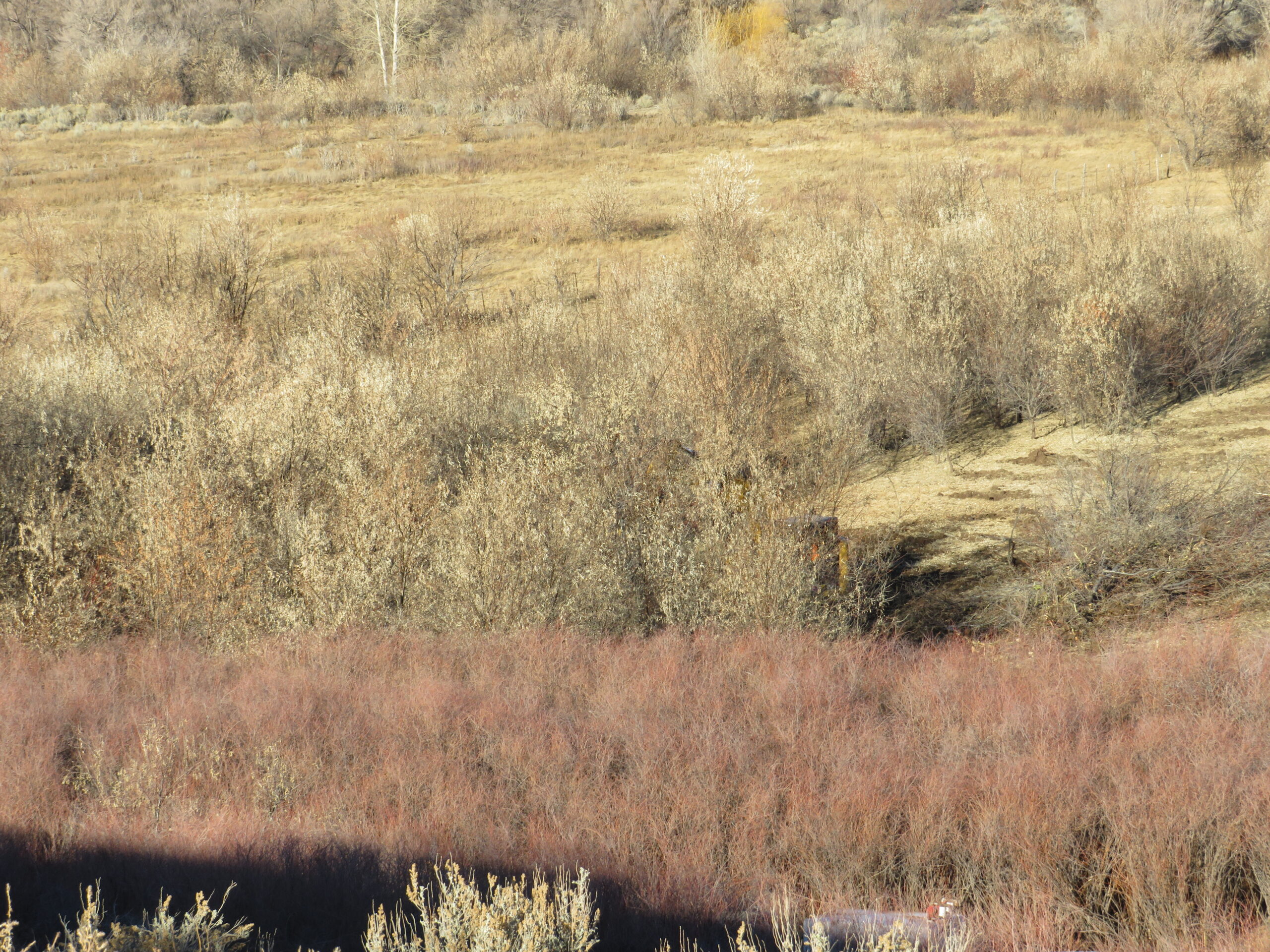
Mikhial Parison, Taos Soil & Water Conservation District