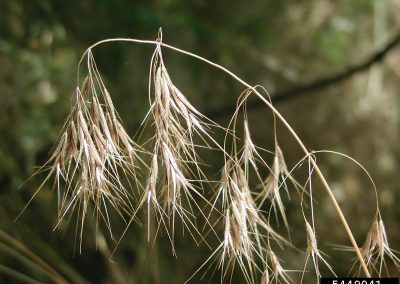
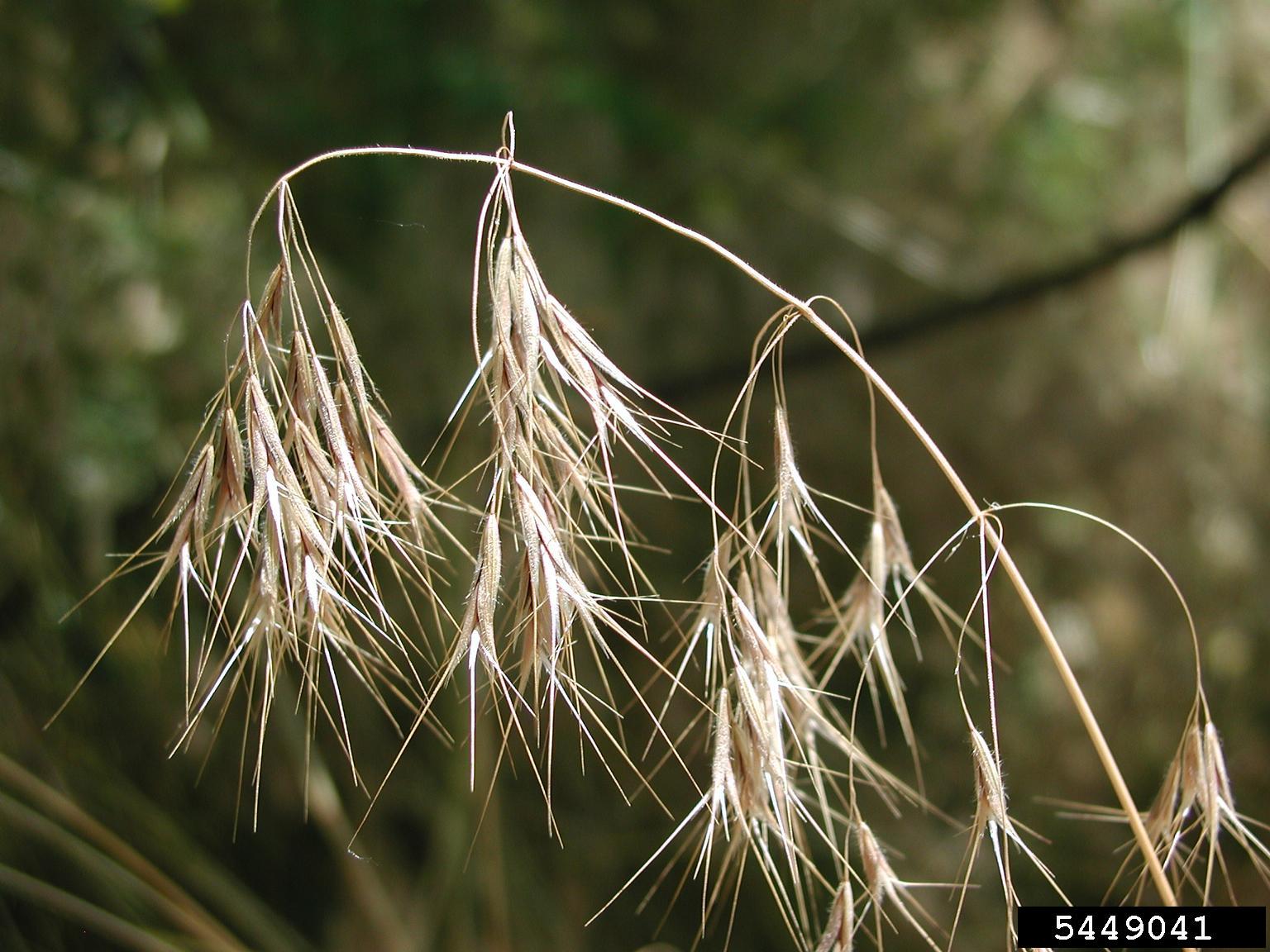
Dead cheatgrass turns fully brown or tan; the florets are now very dry and spikey. At this point, it can injure livestock and horses if consumed.
Another example of cheatgrass florets beginning to turn purple.
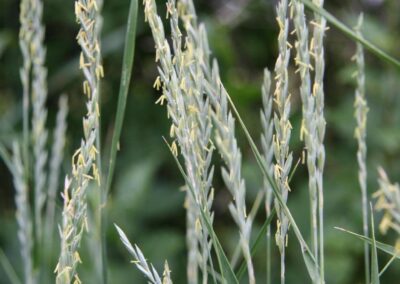
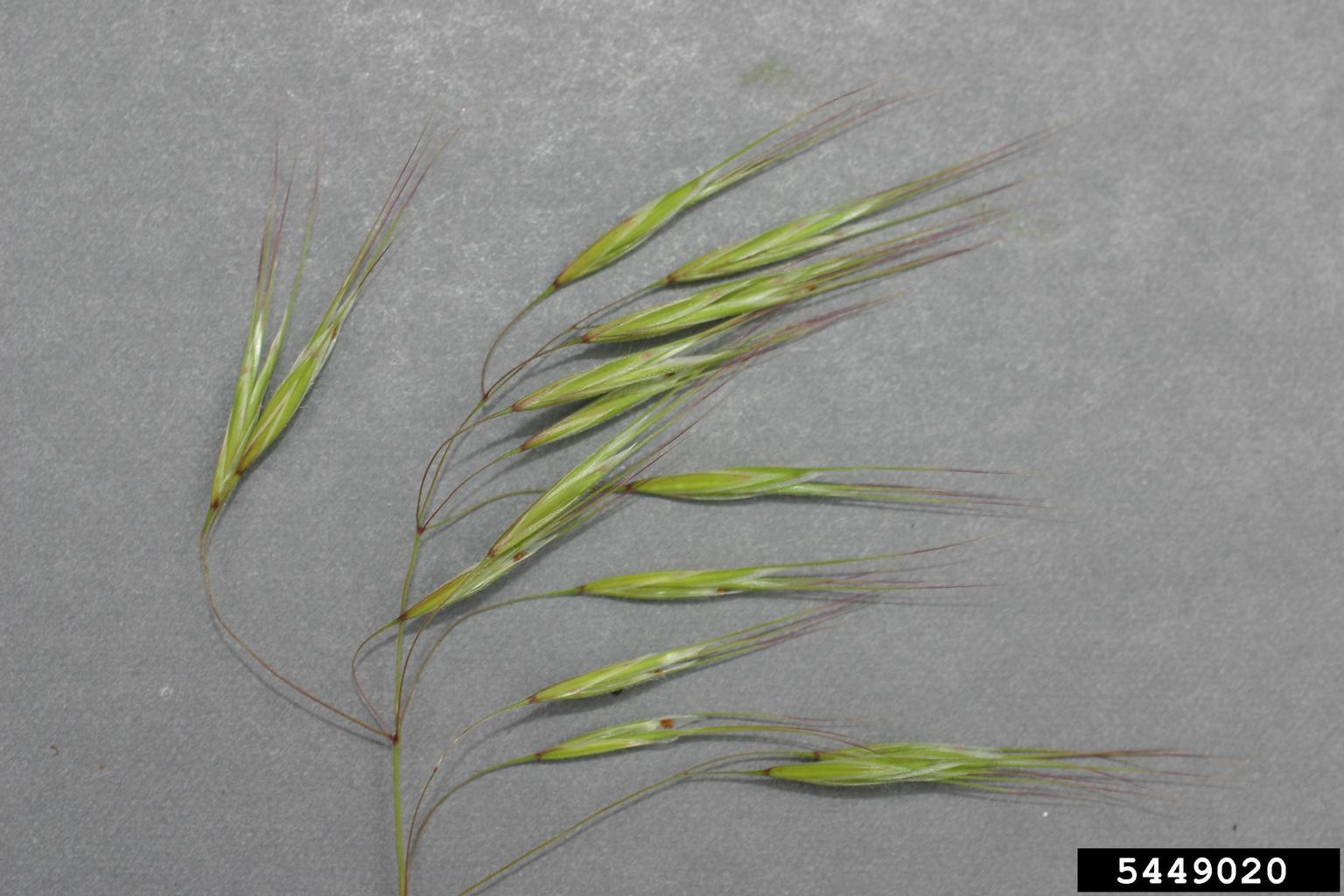
Young cheatgrass florets; at this point they may be safe and palatable for livestock.
Tips and stems of florests begin to turn purple as the plant matures.
At the end of its life cycle, cheatgrass plant has turned brownish-red and is no longer good forage.
Fully dead cheatgrass florets can injure the throats and digestive tracts of animals
Leaves & Stems
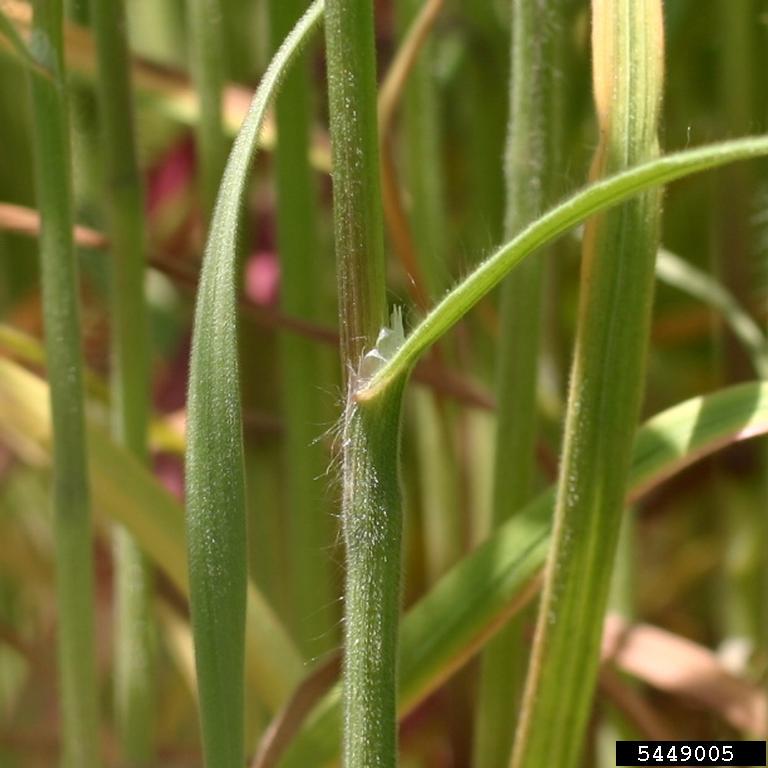
Cheatgrass stems begin to turn red as the plant mature; note the thin white collar-like ligule at the base of the leaf blade.
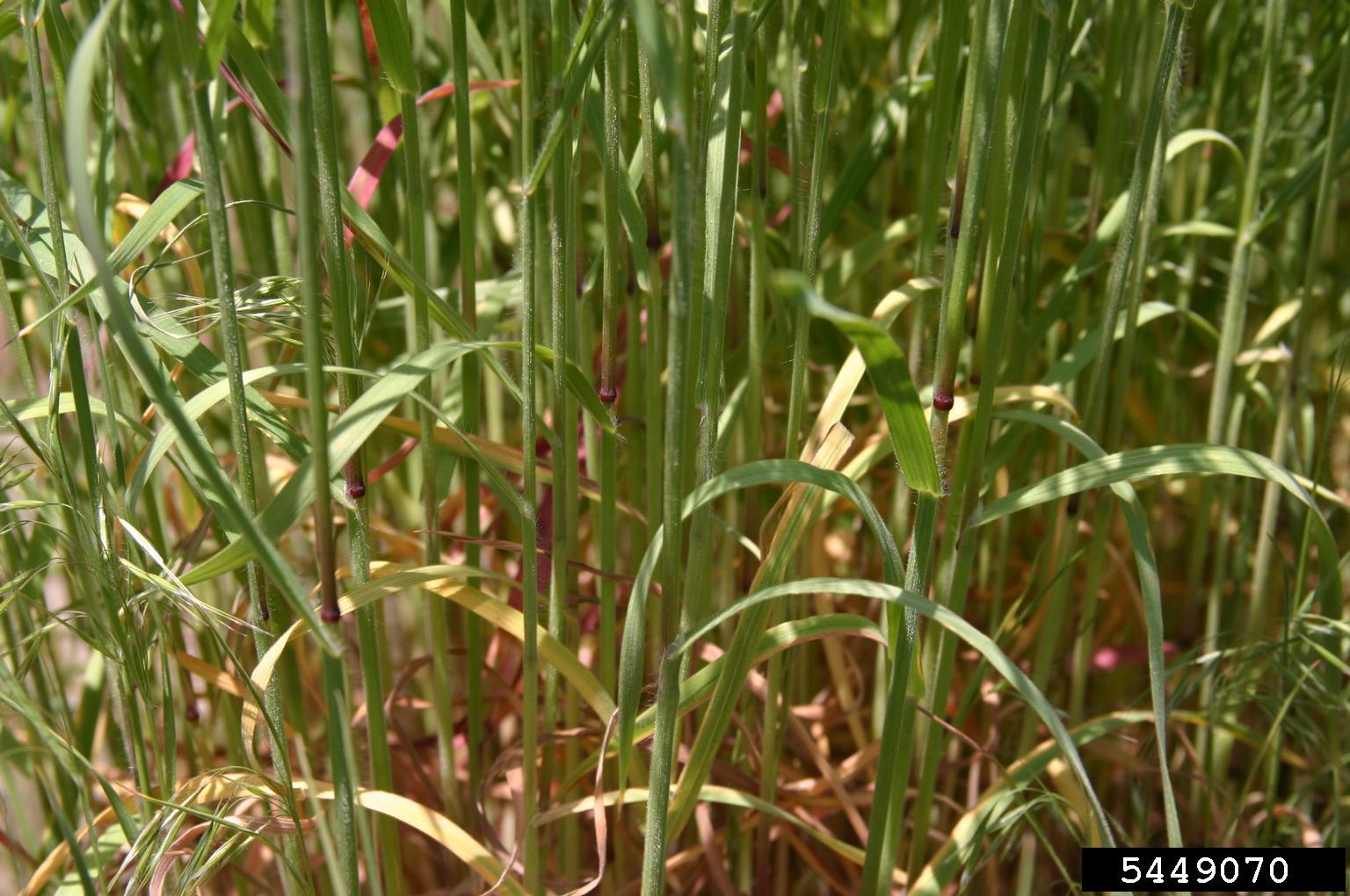
A community of cheatgrass stems; it is not uncommon for some of the foliage to turn yellow prematurely, especially during dry times.
The leaf blade emerges from the sheath, which reaches up from the base of the plant.
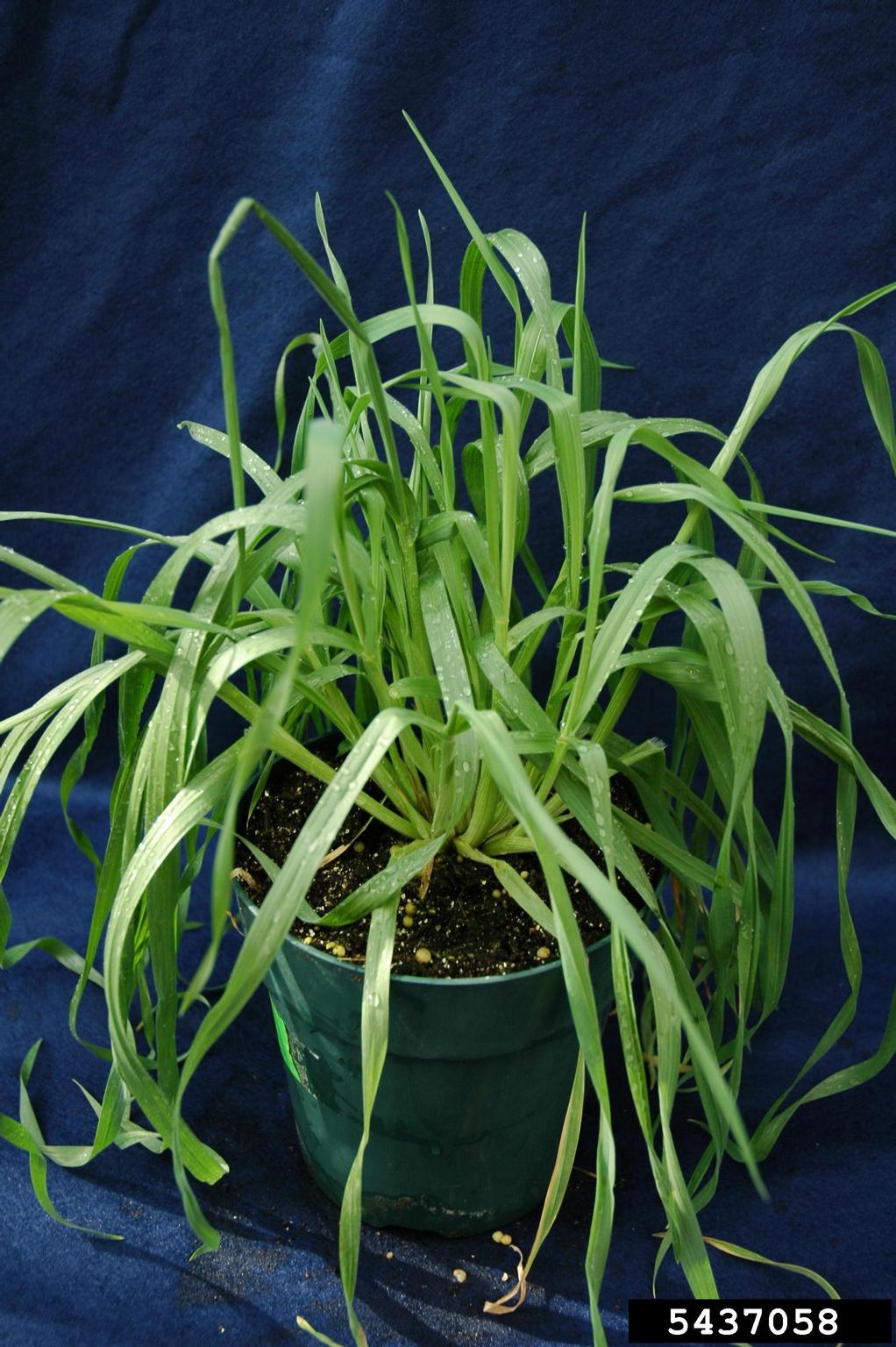
Immature, non-reproductive cheatgrass foliage; the foliage is soft and palatable, and no florets have emerged.
Flowers
Dead cheatgrass turns fully brown or tan; the florets are now very dry and spikey. At this point, it can injure livestock and horses if consumed.
Another example of cheatgrass florets beginning to turn purple.
Young cheatgrass florets; at this point they may be safe and palatable for livestock.
Tips and stems of florests begin to turn purple as the plant matures.
At the end of its life cycle, cheatgrass plant has turned brownish-red and is no longer good forage.
Fully dead cheatgrass florets can injure the throats and digestive tracts of animals
Leaves & Stems
Cheatgrass stems begin to turn red as the plant mature; note the thin white collar-like ligule at the base of the leaf blade.
A community of cheatgrass stems; it is not uncommon for some of the foliage to turn yellow prematurely, especially during dry times.
The leaf blade emerges from the sheath, which reaches up from the base of the plant.
Immature, non-reproductive cheatgrass foliage; the foliage is soft and palatable, and no florets have emerged.
Manage Cookie Consent
We use cookies to understand how visitors use our website and to implement Adobe Fonts.
Functional
Always active
The technical storage or access is strictly necessary for the legitimate purpose of enabling the use of a specific service explicitly requested by the subscriber or user, or for the sole purpose of carrying out the transmission of a communication over an electronic communications network.
Preferences
The technical storage or access is necessary for the legitimate purpose of storing preferences that are not requested by the subscriber or user.
Statistics
The technical storage or access that is used exclusively for statistical purposes.The technical storage or access that is used exclusively for anonymous statistical purposes. Without a subpoena, voluntary compliance on the part of your Internet Service Provider, or additional records from a third party, information stored or retrieved for this purpose alone cannot usually be used to identify you.
Marketing
The technical storage or access is required to create user profiles to send advertising, or to track the user on a website or across several websites for similar marketing purposes.