
Perennial Pepperweed
Lepidium latifolium
Class B
Llimited to portions of the state. In areas with severe infestations, management should be designed to contain the infestation and stop any further spread.
Riparian Threat
This plant is known to invade riparian areas or otherwise damage the health and abundance of our water resources.
Agricultural Threat
This plant threatens our state’s food security and economy by reducing agriculture yields and/or degrading soil resources.
Local Ecosystems
This plant is detrimental to native ecosystems, negatively impacting the quality of forage for wildlife and reducing biodiversity in plant communities.
QUICK FACTS
- Perennial pepperweed is an herbaceous perennial that produces thousands of seeds and grows from existing roots. It competes with desired vegetation for water and space. This weed threatens many riparian and wetland ecosystems and, while edible, is undesirable to most domestic and wild animals.
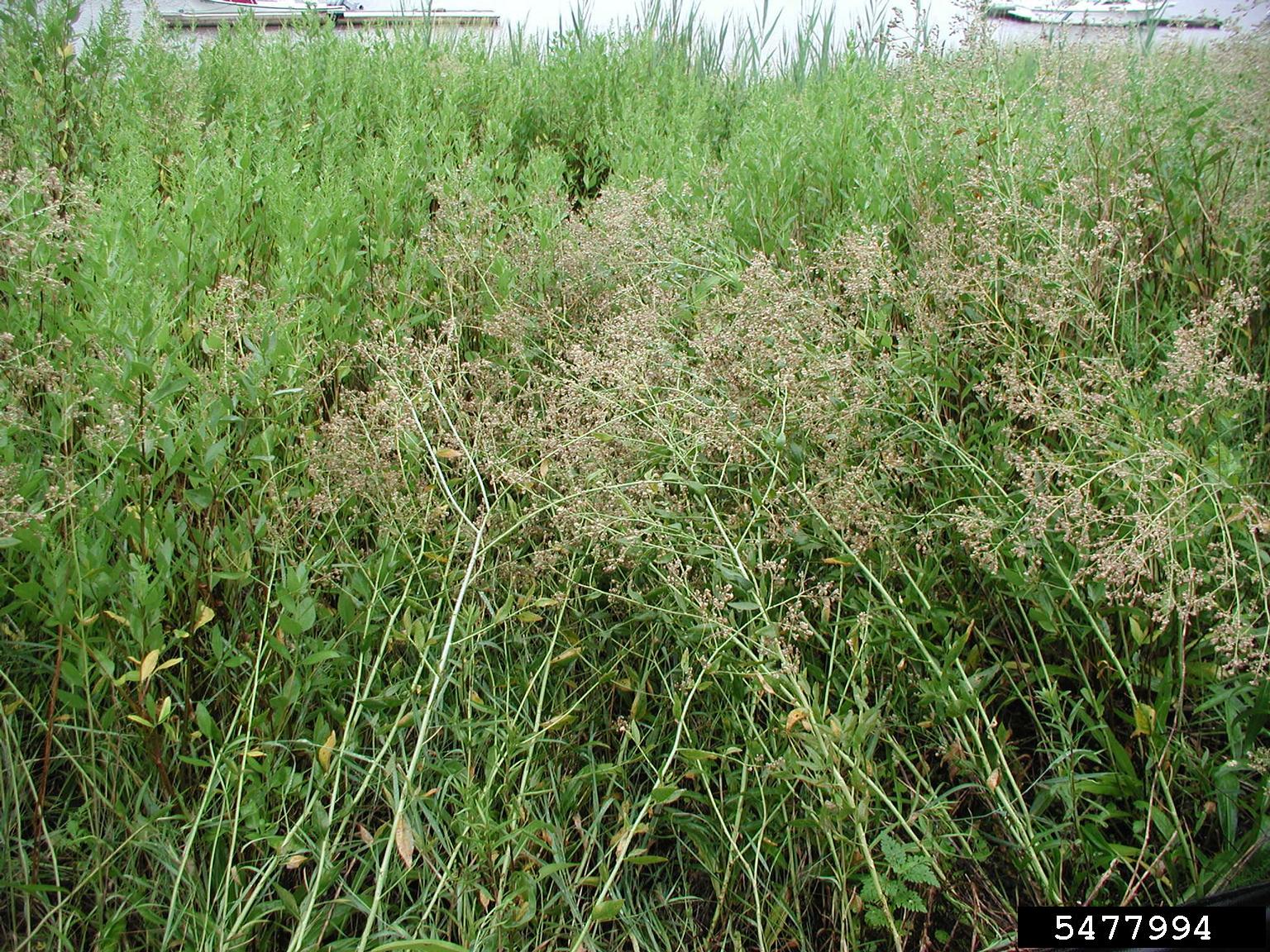
- Native to the Eurasian continent, this weed can grow in a variety of soil types and sun exposure. It creates thick monocultures that prevent other plants from growing. Additionally, it increases soil salinity and exacerbates erosion in infected areas.
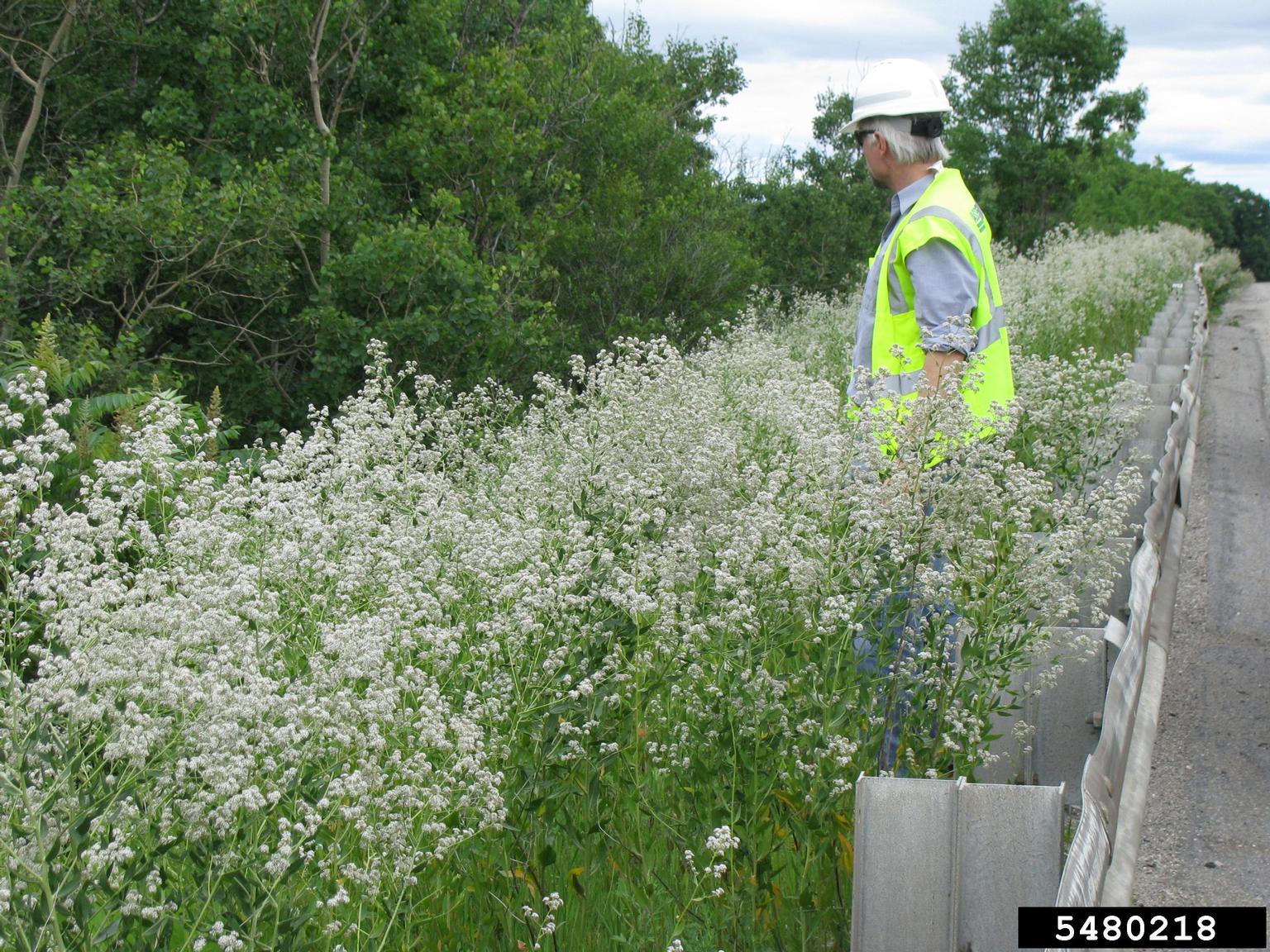
- Perennial pepperweed can grow up to 8 feet tall, has grey-green leaves and live stems, and tan colored dead stems around the base of the plant. Flowers appear around May or June and have small, white petals arranged in a cross shape, forming bunches at the top of the stems.
1. Overview
A spicy, small-flowered weed that produces billions of seeds per acre.
Perennial pepperweed is a perennial forb native to Europe and Asia. It invades areas with moisture, like grasslands and river valleys. While its seeds have low germination rates, individual plants can produce thousands of seeds and can also grow from roots. In New Mexico, perennial pepperweed takes over riparian areas, irrigation ditches, floodplains, and wetlands. Its dense stands displace desired vegetation, increase soil salinity, and reduce forage quality. [1,8]
History of Perennial Pepperweed
Perennial pepperweed is native to Eurasia. Its leaves and roots were eaten as a spicy garnish in several areas. It was also used to make medicines that treated stomach ailments and kidney stones. It is commonly grazed by sheep, cattle, and goats in its native habitat. It was likely introduced to North America through contaminated sugar beet seeds. There were several sightings across the U.S. through the early 1900s, suggesting it was introduced into multiple locations. [5]
This weed likely reached New Mexico around 1987, shortly after it was discovered in Arizona. This plant can spread by seeds, in waterways, through animal feces, and via root fragments. Over time, perennial pepperweed displaces native vegetation and increases soil salinity, reducing wildlife in the area. [3,5]
2. ID Guide
What does it look like?
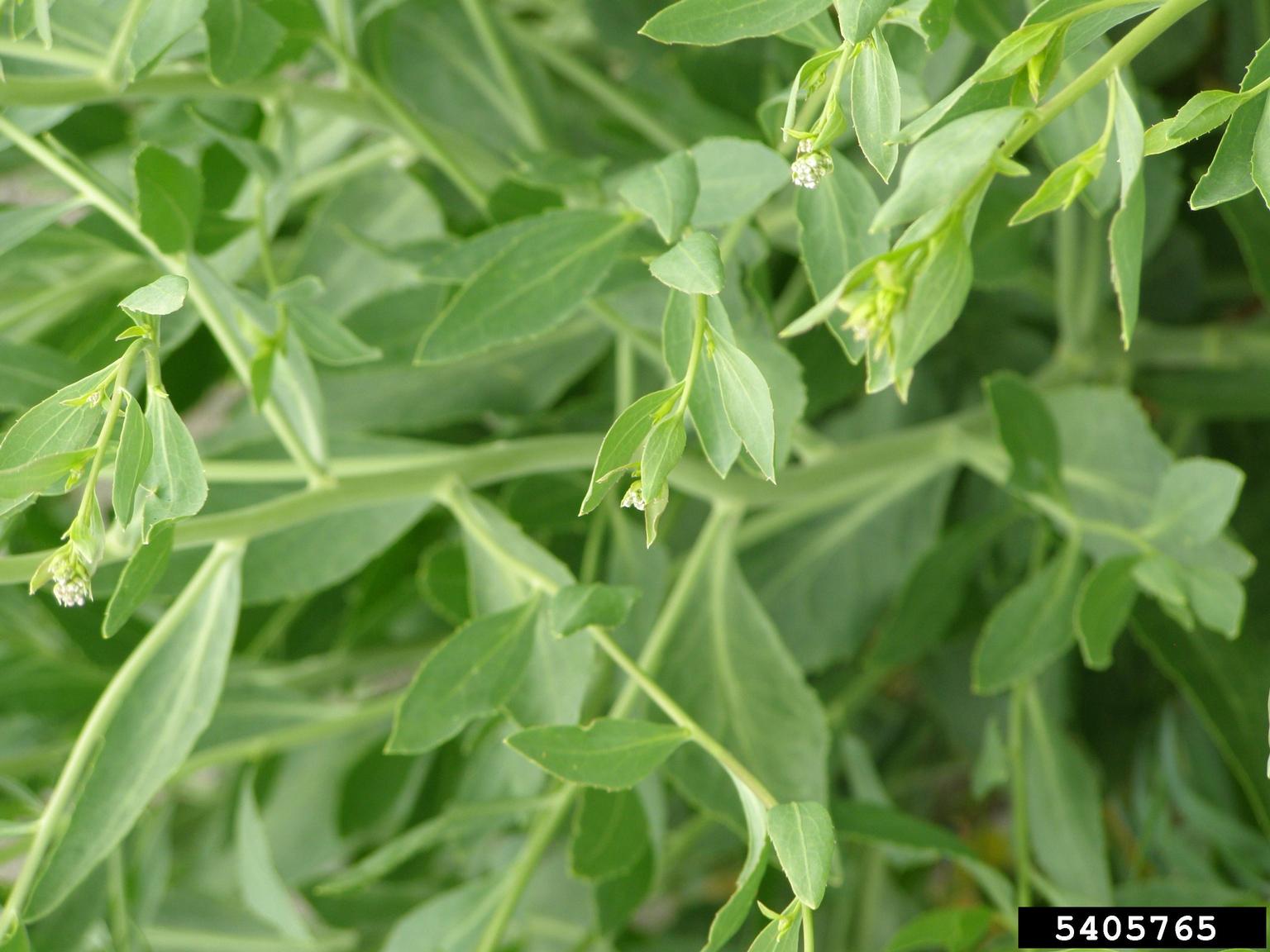
Perennial pepperweed is a tall forb with green stems and leaves, has a deep, creeping root, and bunches of small white flowers at the end of branches. It usually has dead, tan stems at the base from previous years. Perennial pepperweed is often confused with hoary cress (also called whitetop), but can be distinguished by size and leaves. Perennial pepperweed is taller (3-8 feet tall), and hoary cress is less than 3 feet tall. Additionally, Perennial pepperweed does not clasp the stem, while hoary cress does. [2]
Having trouble identifying a weed?
Contact your local conservation district or county extension agent.
Key Features
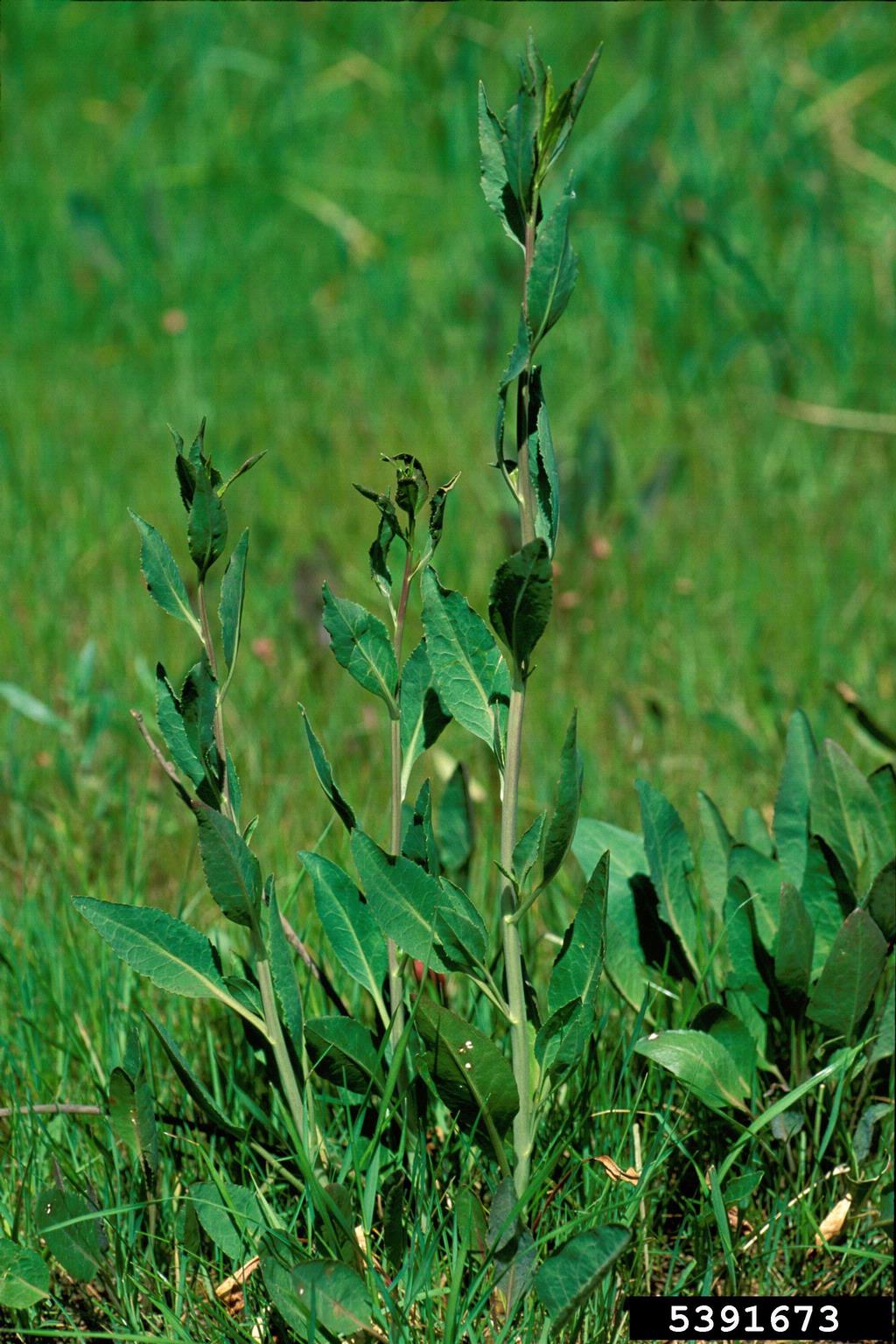
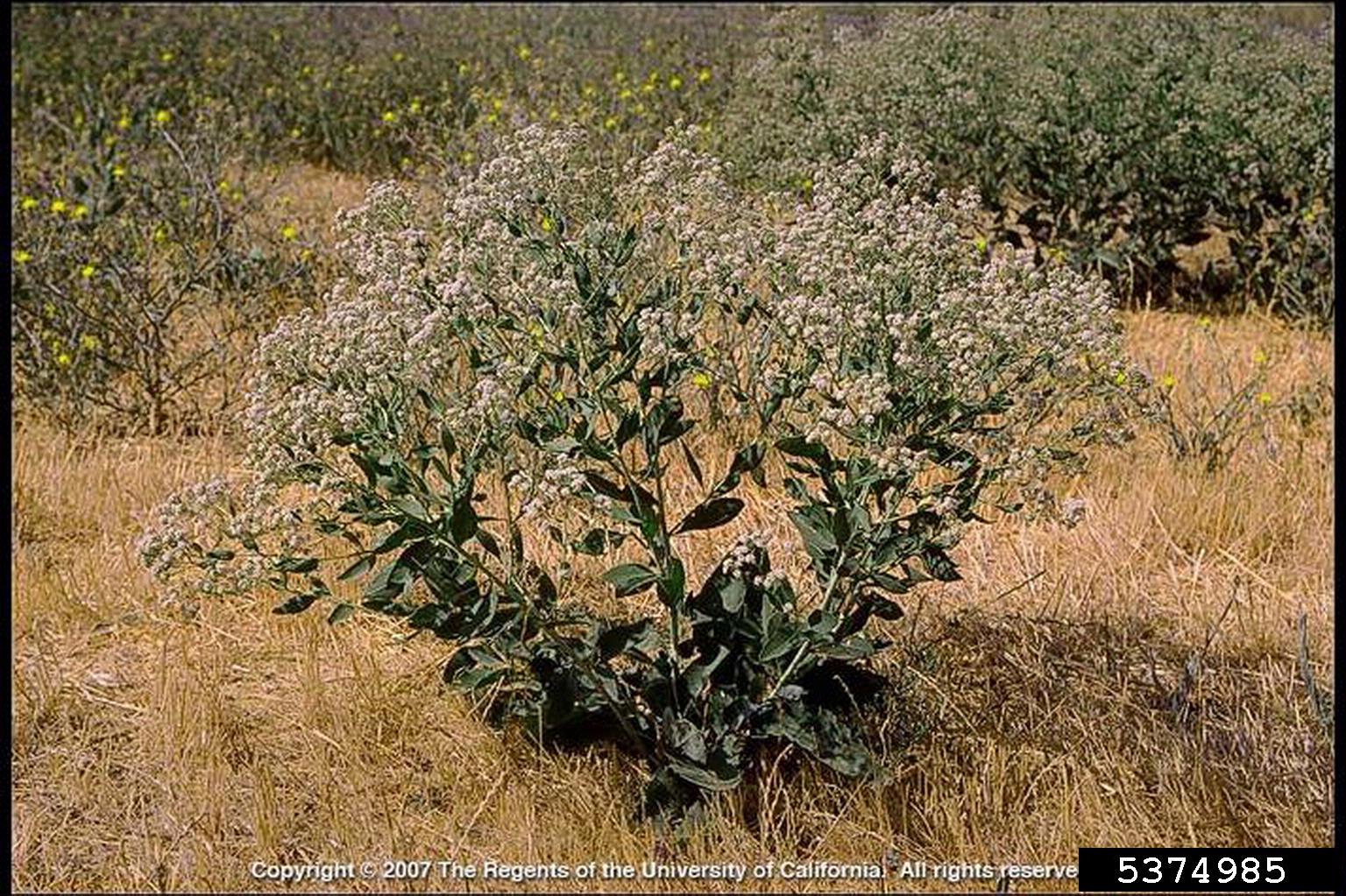
- Plant: Perennial pepperweed is a perennial forb that germinates from winter to early spring, and can flower within its first year. Stems are green when alive, usually grow to about 3 feet tall, but can reach 8 feet in high-moisture areas. They are hairless, stiff, and branching. Perennial pepperweed stems die back each year and turn a light tan. The stem base is semi-woody. [1,4]
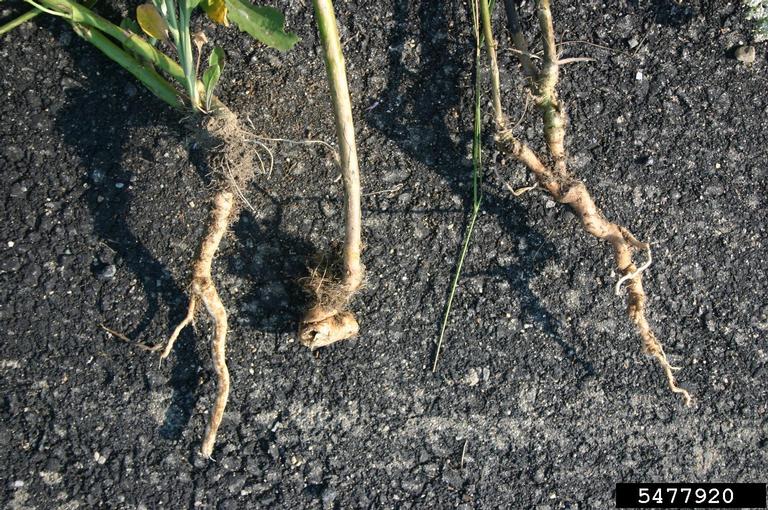
- Roots: Perennial pepperweed has a creeping root system that grows deeply to reach the water table and spreads horizontally up to 10 feet per year. Most of the root mass is found in the upper 2 feet of soil, but it can reach depths of over 10 feet, down to the water table. They have a fleshy color and mostly coarse roots, with very few root hairs. [1,3]
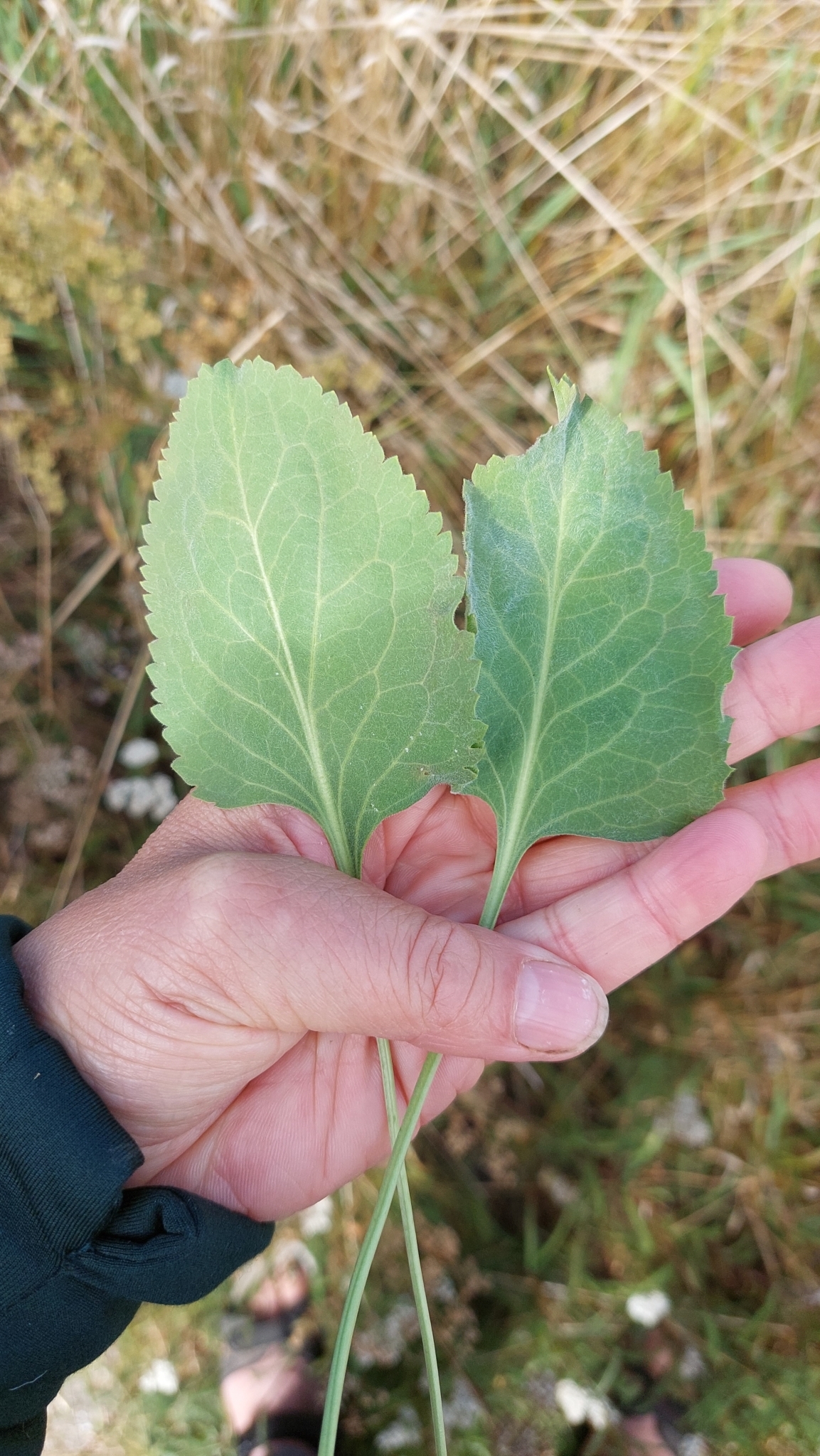
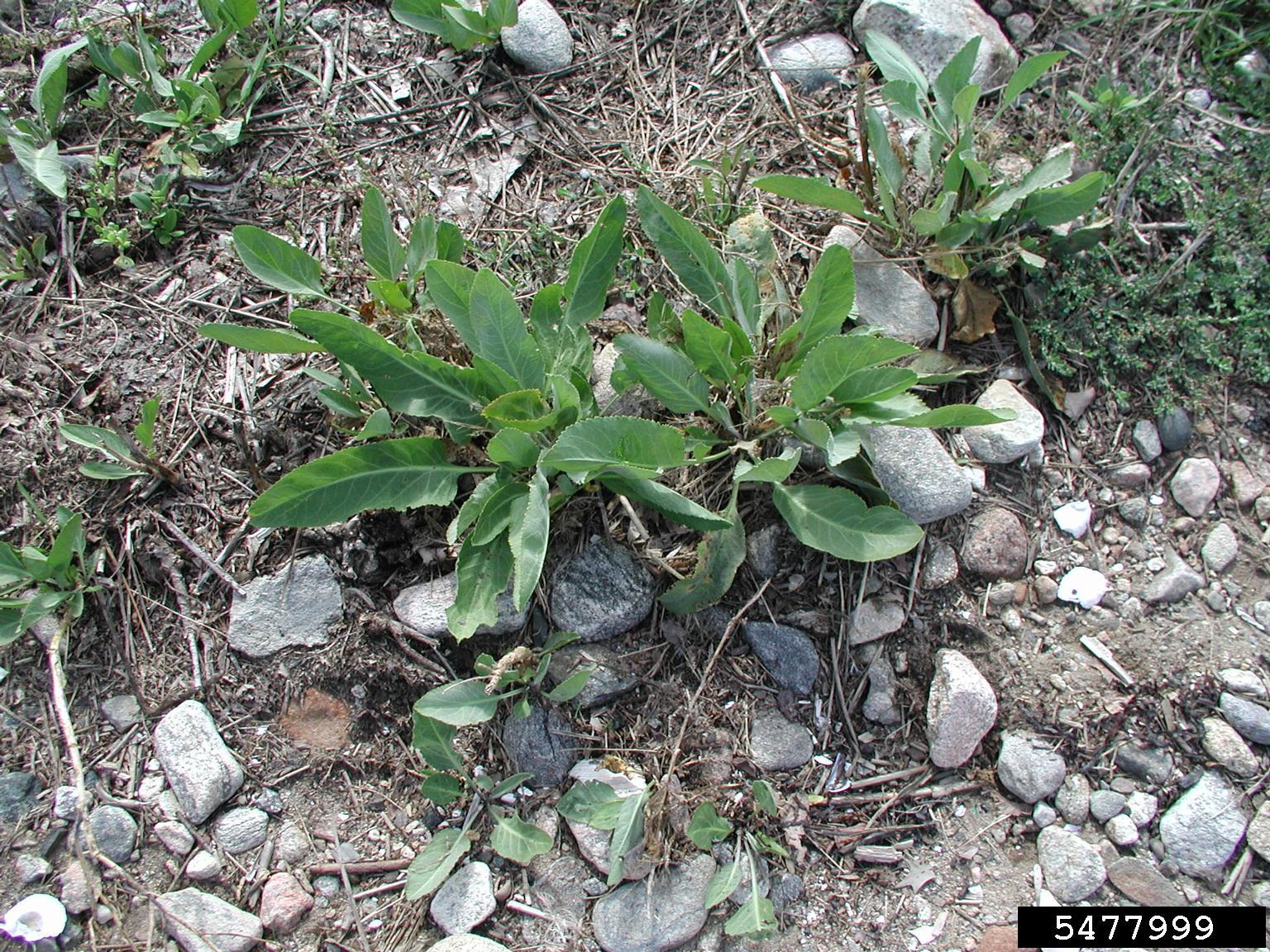
- Leaves: Leaves can be grey-green to bright green. Perennial pepperweed has basal rosette leaves up to 12 inches long and 0.5-3 inches wide. Basal leaves are entire with toothed margins, and can be ovate to oblong. Stem leaves are smaller, do not clasp the stem, lance-shaped, and have a leathery texture. [1,2]
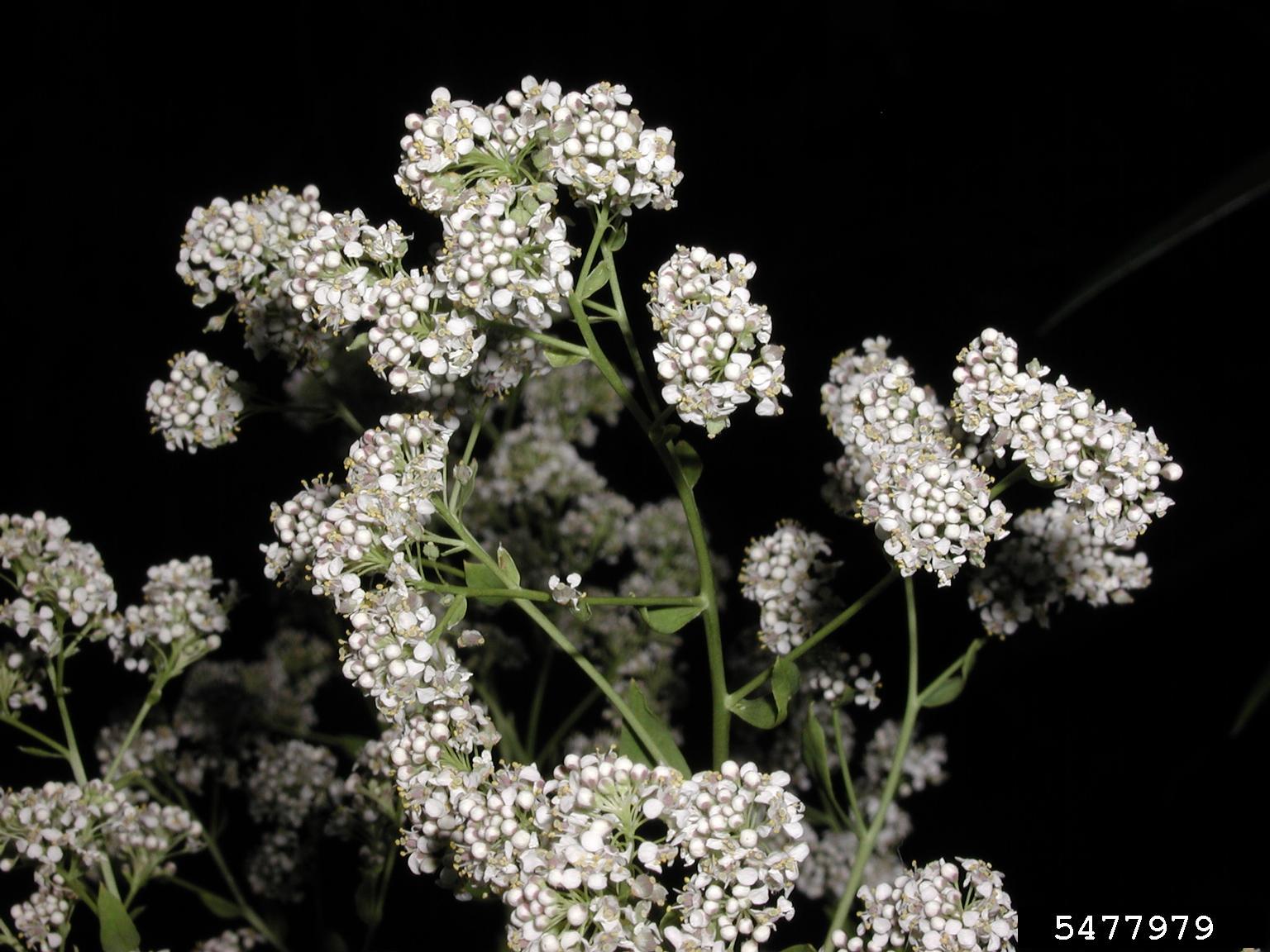
- Flowers: Flowers are small, white, and cross-shaped. Each flower has 4 petals, less than 3mm long, and six stamens. Flowers are bunched at the ends of branches, and can be found from early summer to fall. [1]
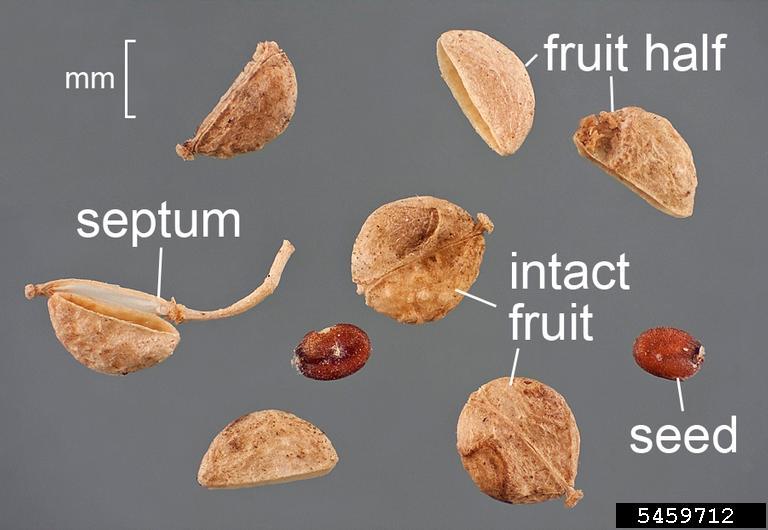
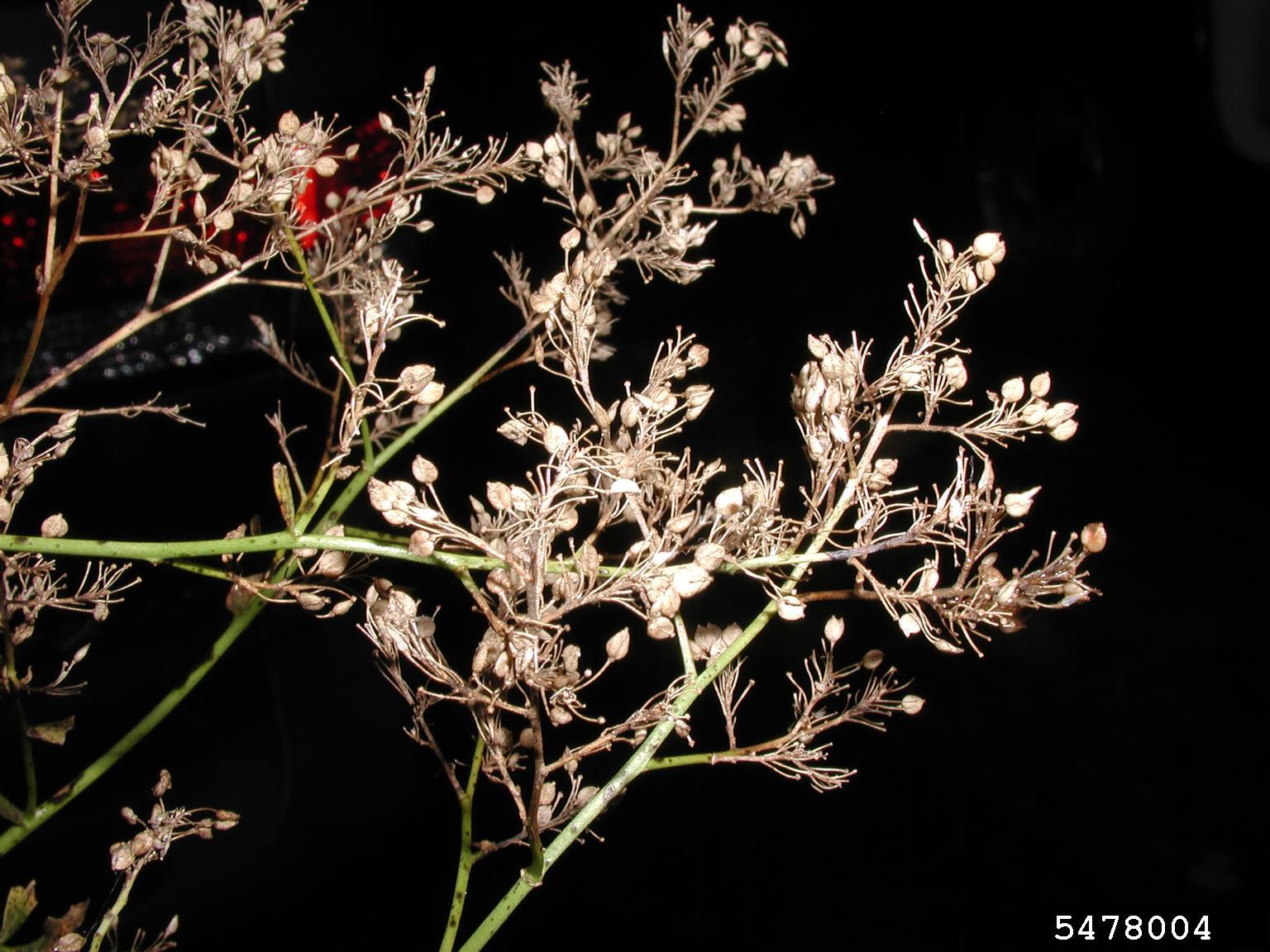
- Seeds: Seeds are found in pod-like fruits called silicles that grow from flowers. Silicles are about 2mm long, round, and fleshy colored. Each fruit holds 2 reddish-brown seeds. Pods stay on plants and drop irregularly through winter. Each plant can produce thousands of seeds, survive flooding for over a month, and withstand drought for about 2 years.
Leslie J. Mehrhoff, University of Connecticut, Bugwood.org
Each flower has 4 petals, less than 3mm long, and six stamens.
Leslie J. Mehrhoff, University of Connecticut, Bugwood.org
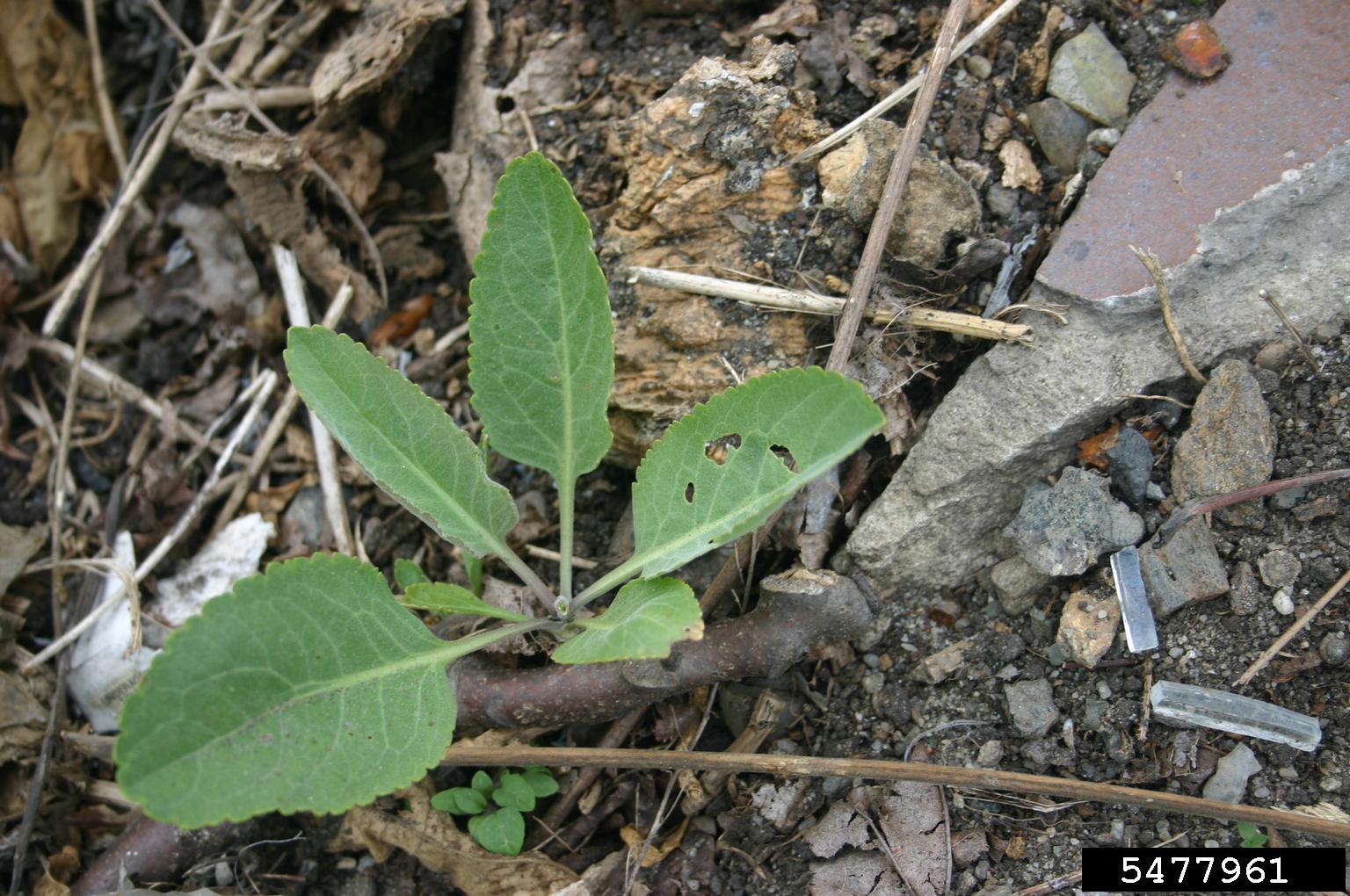
Rosettes grow from roots usually in late winter or early spring. A few weeks after rosettes form, bolting occurs.
Leslie J. Mehrhoff, University of Connecticut, Bugwood.org
Most of the root mass is found in the upper 2 feet of soil, but it can reach depths of over 10 feet, down to the water table.
Mette Ósland Pedersen, inaturalist.org
Basal leaves are entire with toothed margins, and can be ovate to oblong.
Joseph M. DiTomaso, University of California – Davis, Bugwood.org
Stems are green when alive, usually grow to about 3 feet tall, but can reach 8 feet in high-moisture areas.
D. Walters and C. Southwick, Table Grape Weed Disseminule ID, USDA APHIS PPQ, Bugwood.org
Seeds are found in pod-like fruits called silicles that grow from flowers. Silicles are about 2mm long, round, and fleshy colored. Each fruit holds 2 reddish-brown seeds.
3. Infestation Basics
“Lepidium latifolium can grow in extremely harsh conditions and is widely used as a stomach tonic and diuretics”
– Verma et. al., 2019
Where and how does it grow, and how does it spread?
Perennial pepperweed grows mainly in riparian areas, but can be found in well-watered fields and roadsides as well. It has creeping roots and can grow from root fragments, and produces thousands of seeds with a germination rate of 64-100%.
Perennial pepperweeds prefer wet areas with lots of sun but can grow in a range of conditions, with the exact tolerance for shade, aridity, alkalinity, and salinity unknown. It is also unclear if disturbed areas affect plant establishment. In New Mexico, they have been seen in elevations from 5000 to 8000 feet. It mainly spreads by its roots, but can produce thousands of seeds per plant each year. [4]
Perennial pepperweed is an herbaceous perennial with creeping roots. New shoots and germination can occur from mid-winter to mid-spring. Rosettes grow from roots usually in late winter or early spring. A few weeks after rosettes form, bolting occurs, and flowering can be seen as early as late spring and seed production by mid-summer. After seed production, stems begin to die, forming dense thickets around their bases. Rosettes can regrow in the fall and persist through winter until next season, but usually grow in early spring. [1,2]
This weed can self-pollinate and cross-pollinate, and relies on insect pollination; it mostly spreads through its roots. Root fragments as small as an inch can regenerate into full plants. Roots usually grow new shoots near the parent plant, but can break off and be carried long distances in water during flooding. Root fragments can also spread long distances by agricultural equipment. [5]
Each plant can produce thousands of viable seeds that can remain viable for about 2 years and can be spread by water, animal, or human movement, or by equipment. Little information is known about seeding in the wild, and more research is needed to better understand its spread. [4]
Key takeaway: There is little information on how to prevent perennial pepperweed from establishing. Avoid disturbing riparian areas or areas with a high water table. Once established, this plant grows thick monocultures that take resources like water away from other native plants, and acts as a salt pump, deterring other plants from growing in infected areas.
Why is it so invasive?
Perennial pepperweed is difficult to get rid of, as it produces thousands of seeds per plant and can regrow from small root fragments. They spread easily through water and create dense stands that increase soil salinity and prevent other vegetation from establishing in infected areas. [4,7]
Perennial pepperweed produces about 2 seeds per flower, and each plant can grow about 100-1000 flowers based on size, leading to thousands of seeds (with a germination rate of 64-100% based on moisture) per plant each year. Seeds are usually spread through water, but can also be spread accidentally in contaminated seeds. It can also grow from root fragments left when digging or pulling weeds, making it difficult to kill. [1,4]
Additionally, it outcompetes desired vegetation by creating dense monocultures that are difficult to penetrate. Its roots extend deeply (over 10 feet or to the water table) and prevent other plants from growing by competing for water and nutrients in the soil. When established, perennial pepperweed increases soil salinity and often reduces floral and faunal diversity in affected areas. [3]
Key takeaway: This plant can produce billions of seeds each year, and can grow from its creeping root and root fragments. It outcompetes desired vegetation and reduces wildlife food and habitat.
Common risk factors for invasion
- Seed contamination: Perennial pepperweed seeds often contaminate agricultural seed crops. Knowledge of seed origins, cleaning, and the use of planting equipment can help prevent infestations.
- Moisture availability: While perennial pepperweed has adapted to a wide range of soil and water conditions, it does generally require adequate moisture to establish and spread, making irrigated lands and areas with consistent rainfall particularly vulnerable.
- Riparian Areas: Seeds are easily carried by streams and other waterways and may subsequently be deposited on river terraces or irrigated fields. Perennial pepperweed can also tolerate flooding for almost 2 months. Being near streams or rivers allows the weed’s roots to reach the water table easily.
Impacts
Ecosystem Health
Once established, perennial pepperweed often creates monocultures that displace native plants, resulting in a notable loss of floral and faunal biodiversity. This reduces food for wildlife and makes surface soils saltier. [5]
Soil Degradation
Perennial pepperweed threatens agriculture by competing for resources and reducing land productivity. It contributes to soil degradation in New Mexico by altering the natural soil composition and structure. This plant also uses large amounts of water, gradually drying out the soil and increasing its susceptibility to erosion. Soil erosion reduces soil fertility and affects water quality in nearby water bodies, as eroded soil particles can carry nutrients and pollutants into streams and rivers. Additionally, the dense growth of perennial pepperweed can hinder the regeneration of native vegetation, leading to long-term soil health issues and further degradation. [5]
Economic
Perennial pepperweed will become a monoculture through aggressive seed production and vegetative growth. While edible, it can reduce the available forage nutrients for domestic livestock and depreciate land value and hay quality. Additionally, cattle tend to avoid stands of pure pepperweed. [5]
Wildlife Habitat
The continued spread of perennial pepperweed harms wildlife by reducing faunal diversity in affected areas. It displaces native plants that birds, insects, and mammals rely on as food and shelter. [5]
4. Management Strategies
Preventative measures are most effective at preventing infestations of perennial pepperweed. Do not disturb soils unnecessarily, do not intentionally plant for landscaping, and prevent seed dispersal by cleaning equipment. If infestation occurs, using both chemical and mechanical methods can help prevent its spread. Mechanical methods such as hand-pulling and mowing can be effective at preventing further spread if done before flowering. Hand pulling can kill plants if the entire or most of the root is removed. Perennial pepperweed can regrow from root fragments as small as 1 inch, making it difficult to remove. Herbicides can effectively kill roots and prevent plant growth. [2,4,7]
DO’s
- Maintain healthy vegetation of native or desired plants in at-risk areas, such as riparian areas or areas with high water tables.
- Pull as much of the root out as possible to prevent further growth.
- Clean equipment to avoid spreading roots or seeds, and dispose of pulled plants in the garbage.
DON’Ts
- Allow the plant to flower and seed, as this helps spread the seeds.
- Allow it to become widespread, it is easier to manage as an individual or small infestation
- Mow after flowering has occurred, as this gives seeds more opportunity to spread.
** The following information is provided courtesy of the UC Weed Research and Information Center. nmweeds.org does not endorse the use of any particular product, brand, or application thereof. **
Non‑chemical control of perennial pepperweed relies on weakening the root system and blocking seed production. Cut or mow the plants repeatedly as they enter early flowering to drain energy from the roots.
Seedlings are easily controlled by hand-pulling or tillage, but these techniques do not control established plants. Seedlings are not often encountered. Root segments as small as 1 inch are capable of producing new shoots. Cultivation and tillage typically increase infestations by dispersing root fragments. Clean equipment after tillage to prevent spreading root fragments.
Mowing stimulates perennial pepperweed plants to resprout and produce new growth, but mowing is helpful for removing accumulated thatch. Combining mowing with herbicides has been shown to be an effective control strategy. For best results, mow plants at the bolting or flower bud stage and apply herbicides to resprouting shoots once they have reached the flower bud stage.
Cattle, sheep, and goats will graze perennial pepperweed, especially rosettes in early spring. When stands are dense it becomes difficult for most animals to graze. However, once livestock are removed, plants quickly resprout.
Burning is not effective at reducing perennial pepperweed stands.
Seasonal flooding for an extended period during the growing season can significantly reduce populations, but anecdotal information indicates that 6 months of submergence are required.
Establishing desirable vegetation in disturbed areas can suppress perennial pepperweed and slow reinvasion after control. Choose vigorous, fast-growing plant species that are adapted to the site. Perennial grasses are a good choice for natural areas and pastures.
Currently no organisms are available.
The following specific use information is based on published papers and reports by researchers and land managers. Other trade names may be available, and other compounds also are labeled for this weed. Directions for use may vary between brands; see label before use. Herbicides are listed by mode of action and then alphabetically. The order of herbicide listing is not reflective of the order of efficacy or preference.
|
2,4-D Several names |
Rate: 2 qt product/acre (1.9 lb a.e./acre) Timing: Postemergence at rosette to flowering stages. Most effective at the flower bud or flowering stage. Remarks: 2,4-D often requires annual application for multiple years. It is broadleaf-selective and safe on most grasses. 2,4-D has minimal soil activity. Do not apply ester formulations when outside temperatures exceed 80°F. Amine forms are as effective as ester forms, and amine forms reduce the chance of off-target movement. |
|
Glyphosate Roundup, Accord XRT II, and others |
Rate: 2 to 4 qt product (Roundup ProMax)/acre (2.25 to 4.5 lb a.e./acre). Spot treatment: 2 % product v/v Timing: Postemergence from seedling to bloom stage. Most effective at the flower bud or flowering stage. Remarks: Glyphosate will not kill seeds or inhibit germination the following season. Glyphosate is nonselective and has no soil activity. It can create bare ground conditions that are susceptible to weed recruitment. In areas with desirable vegetation, use spot treatment. Glyphosate is a good control option if reseeding is planned shortly after application, as it will not injure seedlings emerging after application. Add a surfactant when using a formulation where it is not already included (e.g., Rodeo, Aquamaster). |
|
Chlorsulfuron Telar |
Rate: 1 to 2.6 oz product/acre (0.75 to 1.95 oz a.i./acre) Timing: Postemergence from seedling to flowering stage. Most effective at flower bud or flowering stage. Remarks: Chlorsulfuron has long soil residual activity. It has mixed selectivity, but is generally safe on grasses. Always use a surfactant. 2,4-D at 1 to 2 pt/acre can be tank-mixed with chlorsulfuron for quicker burndown. Telar can be used near water, but cannot be applied to water. Chlorsulfuron is included with aminocyclopyrachlor in Perspective. This combination (i.e., formulation) is expected to provide good control, but has not been reported |
|
Imazapic Plateau |
Rate: 8 to 12 oz product/acre (2 to 3 oz a.e./acre) Timing: Postemergence from seedling to flowering stage. Most effective from the bud to the late flowering stage. Remarks: Imazapic gives effective control with some soil residual activity. It can be used in combination with glyphosate (premix trade name of Journey). Selective to most native grasses. Higher rates may suppress seedings of some cool-season grasses. Add a methylated seed oil. Imazapic is not registered for use in California. |
|
Imazapyr Habitat |
Rate: 1 to 2 qt product/acre (0.5 to 1 lb a.e./acre) Timing: Postemergence from seedling to flowering stage. Most effective from the bud to the late flowering stage. Remarks: Habitat is registered for aquatic use. Also effective following early season mowing and/or disking. It is nonselective, has long soil residual activity, and leaves more bare ground than other treatments, even a year after application. Add a spray adjuvant. |
|
Metsulfuron Escort
|
Rate: 1 to 2 oz product/acre (0.6 to 1.2 oz a.i./acre) Timing: Postemergence from the seedling to the flowering stage. Most effective at flower bud and flowering stage. Remarks: Metsulfuron has similar activity compared to chlorsulfuron. Metsulfuron has some soil residual activity. Always use a surfactant. Metsulfuron can be tank-mixed with 2,4-D for quicker burndown. Other premix formulations of metsulfuron can be used at similar application timing. These include Cimarron Max (metsulfuron + dicamba + 2,4-D) and Cimarron X-tra (metsulfuron + chlorsulfuron). Metsulfuron is not registered for use in California. |
|
Propoxycarbazone- sodium Canter R+P |
Rate: 0.9 to 1.2 oz product/acre (0.63 to 0.84 oz a.i./acre) Timing: Postemergence to young, rapidly growing plants. Remarks: Propoxycarbazone is a broad-spectrum herbicide that will control many species. It will provide only partial control of perennial pepperweed. Perennial grass species vary in tolerance. A non- ionic surfactant should be added at 0.25 to 0.5% v/v solution. |
5. Citations
[1] J. Jacobs and J. Mangold, “Ecology and Management of Perennial Pepperweed [Lepidium latifolium L.],” United States Department of Agriculture- Natural Resource Conservation Service, 2007.
[2] R. G. Wilson, “Perennial Pepperweed- Integrated Pest Management for Home Gardeners and Landscape Professionals,” ipm.ucanr.edu, 2015. Available: https://ipm.ucanr.edu/PMG/PESTNOTES/pn74121.html
[3] M. Renz, C. Bell, C. Wilen, and J. Ditomaso, “Perennial Pepperweed- Foreign invader in California’s wildlands,” 2002. Available: https://wric.ucdavis.edu/PDFs/perennial%20pepperweed%20WRIC%20leaflet%2002-1.pdf
[4] K. Zouhar, “Lepidium latifolium- Fire Effects Information System,” fs.usda.gov, 2004. Available: https://www.fs.usda.gov/database/feis/plants/forb/leplat/all.html
[5] S. Stutz and H. Hinz, “Lepidium latifolium (perennial pepperweed),” CABI Compendium, 2022, doi: https://doi.org/10.1079/cabicompendium.115209
[6] A. K. Verma, Y. Goyal, and K. Dev, “Medicinal value and mechanism of light adaptation in Lepidium latifolium in Ladakh region,” Environcj.in, 2019. Available: https://journal.environcj.in/index.php/ecj/article/view/93/41
[7] P. Holloran, A. Mackenzie, S. Farrell, and D. Johnson, PERENNIAL PEPPERWEED Lepidium latifolium. The Watershed Project and California Invasive Plant Council, 2004, pp. 78–79. Available: https://www.cal-ipc.org/docs/ip/management/wwh/pdf/19639.pdf
[8] J. Ashigh, J. Wanstall, and F. Sholedice, “Troublesome Weeds of New Mexico,” New Mexico State College of Agricultural, Consumer and Environmental Sciences, 2010. Available: https://www.emnrd.nm.gov/sfd/wp-content/uploads/sites/4/troublesome_weeds_nm.pdf
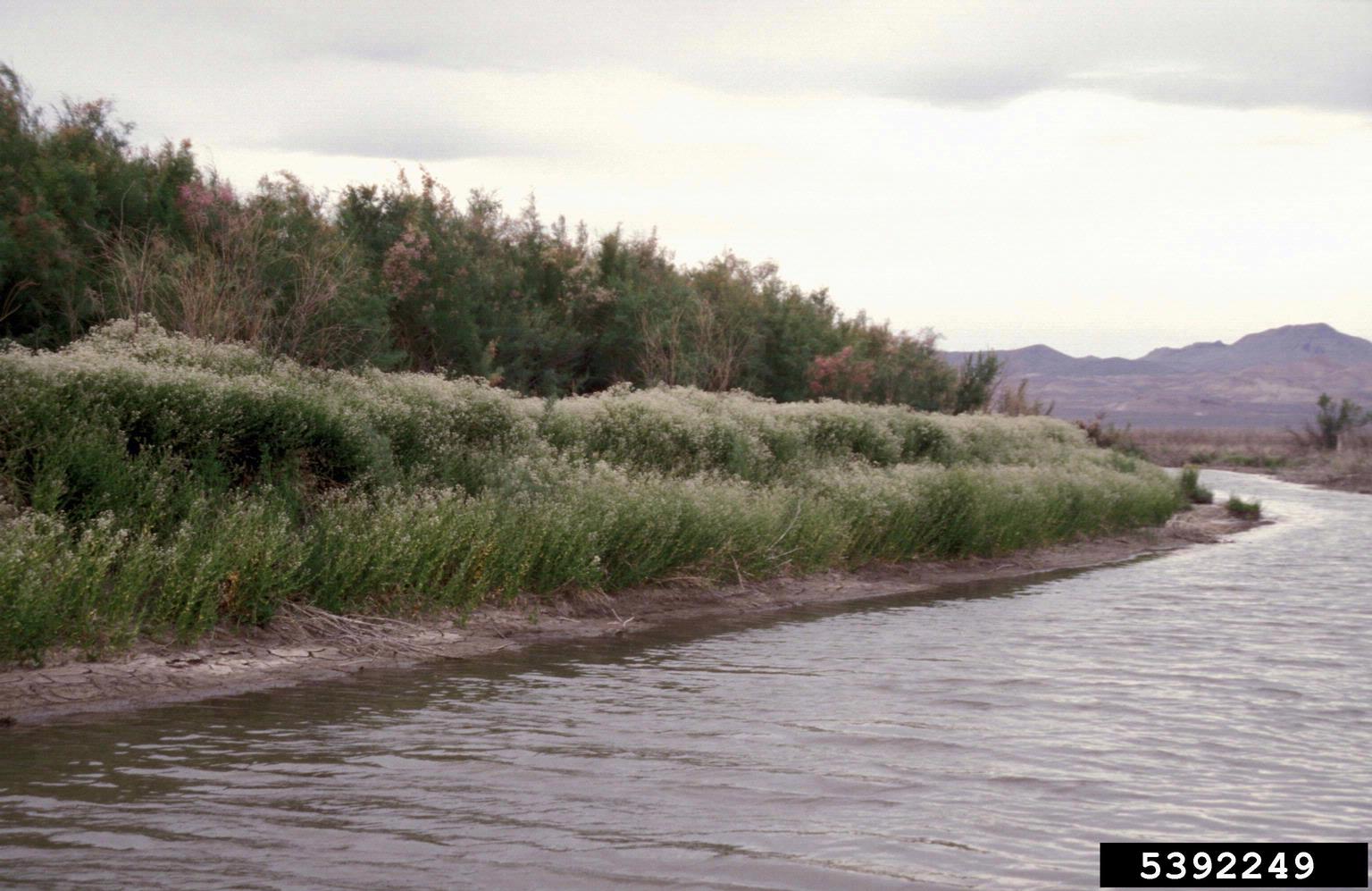
John M. Randall, The Nature Conservancy, Bugwood.org
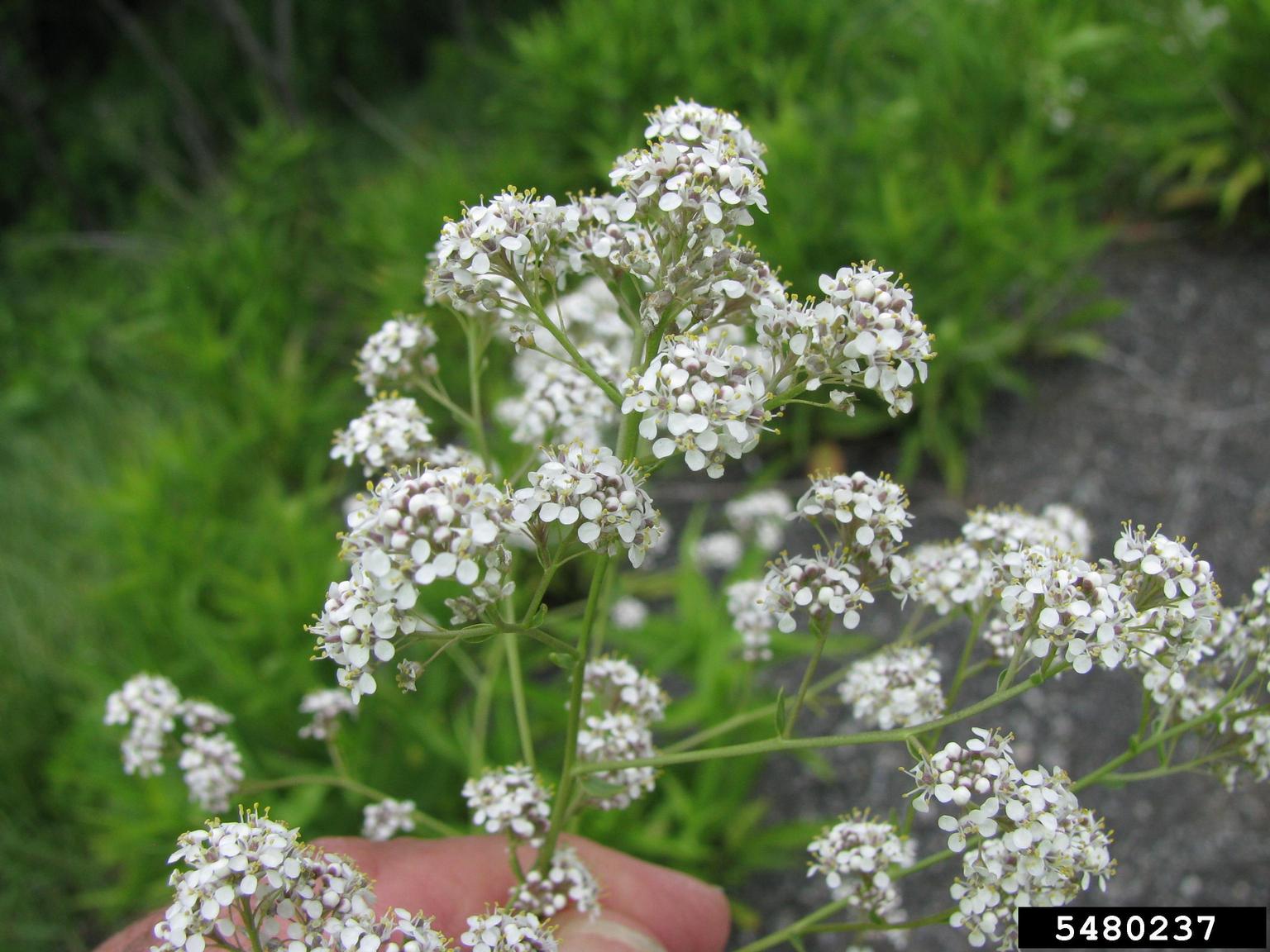
Leslie J. Mehrhoff, University of Connecticut, Bugwood.org
Perennial pepperweed was traditionally used as a diuretic and to stop kidney hemorrhage. It continues to be studied for the development of new medicines and has been found to contain many antioxidants that may be useful in treating other ailments. [6]
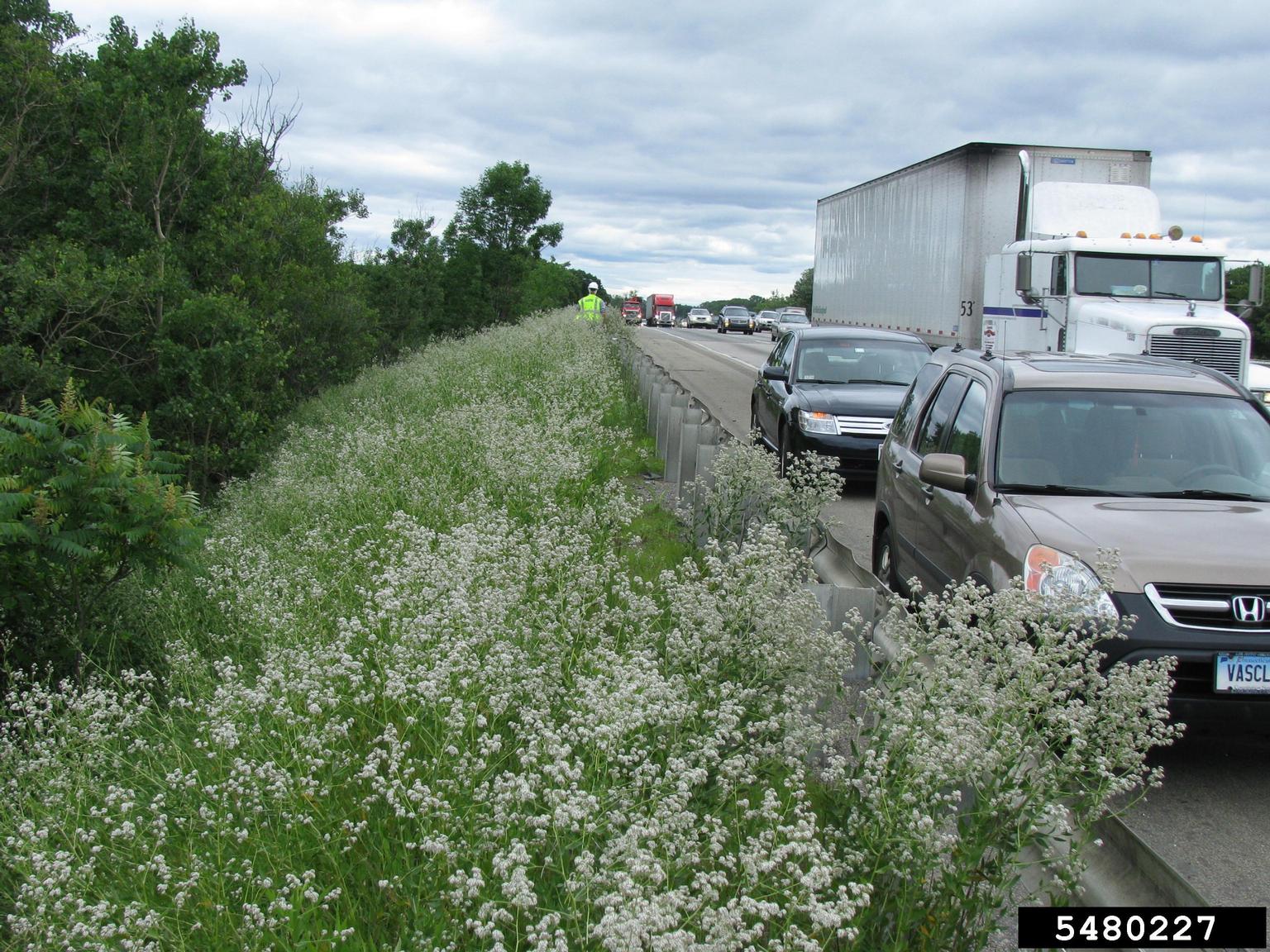
Leslie J. Mehrhoff, University of Connecticut, Bugwood.org
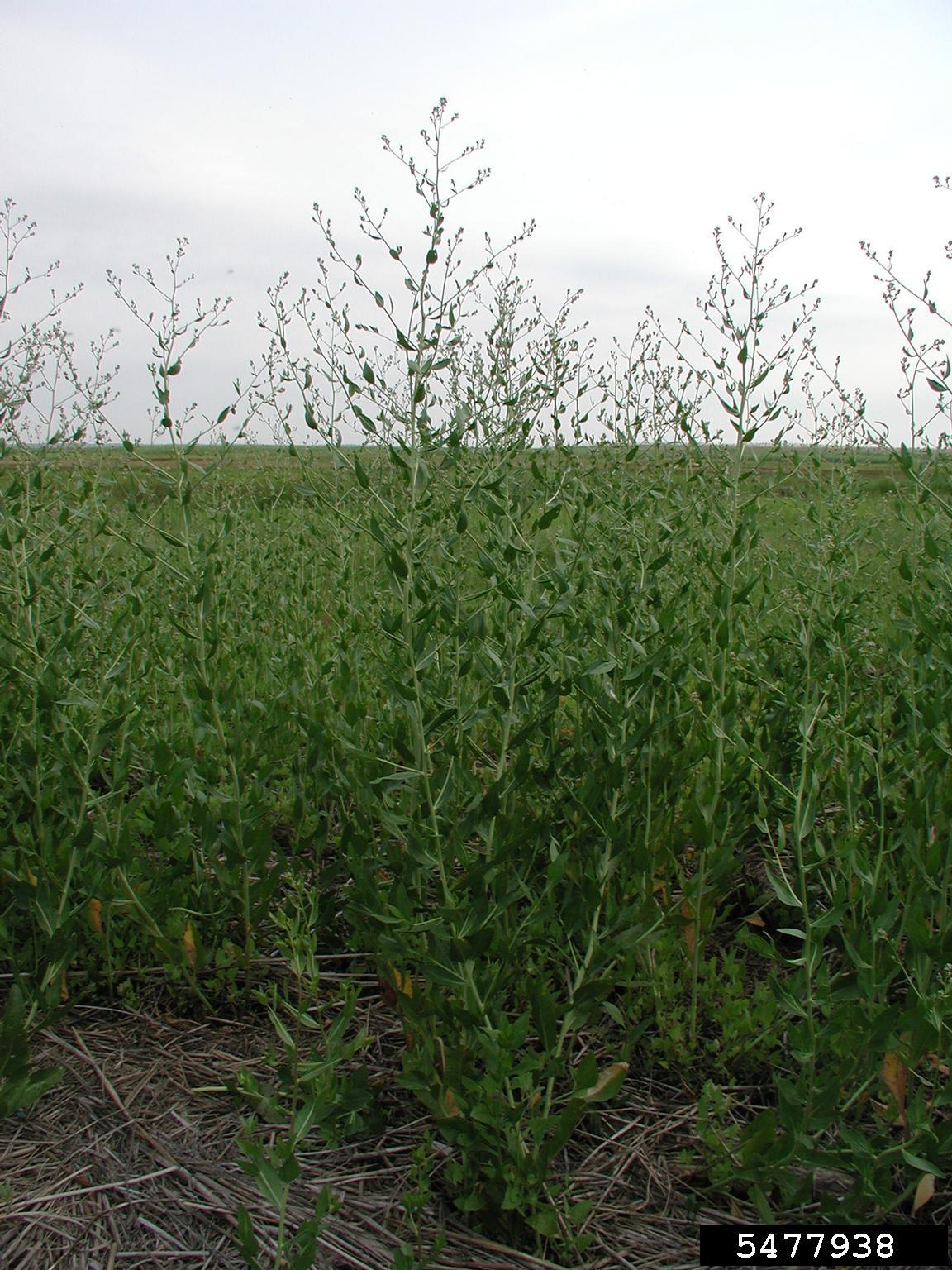
Leslie J. Mehrhoff, University of Connecticut, Bugwood.org
Perennial pepperweed was also eaten as a spicy salad green in the Ladakh Himalayas. In medieval Britain, seeds were called “poor man’s pepper,” and the roots were used as a substitute for horseradish. [7]
Leslie J. Mehrhoff, University of Connecticut, Bugwood.org
Leslie J. Mehrhoff, University of Connecticut, Bugwood.org
While spikes deter large animals from grazing, several small mammals and birds enjoy this plant for its seeds and the insects it attracts. Several insects also enjoy common teasel and help pollinate this weed. Additionally, teasel was used in the textile industry to raise fabric nap. [2]
Leslie J. Mehrhoff, University of Connecticut, Bugwood.org
Leslie J. Mehrhoff, University of Connecticut, Bugwood.org
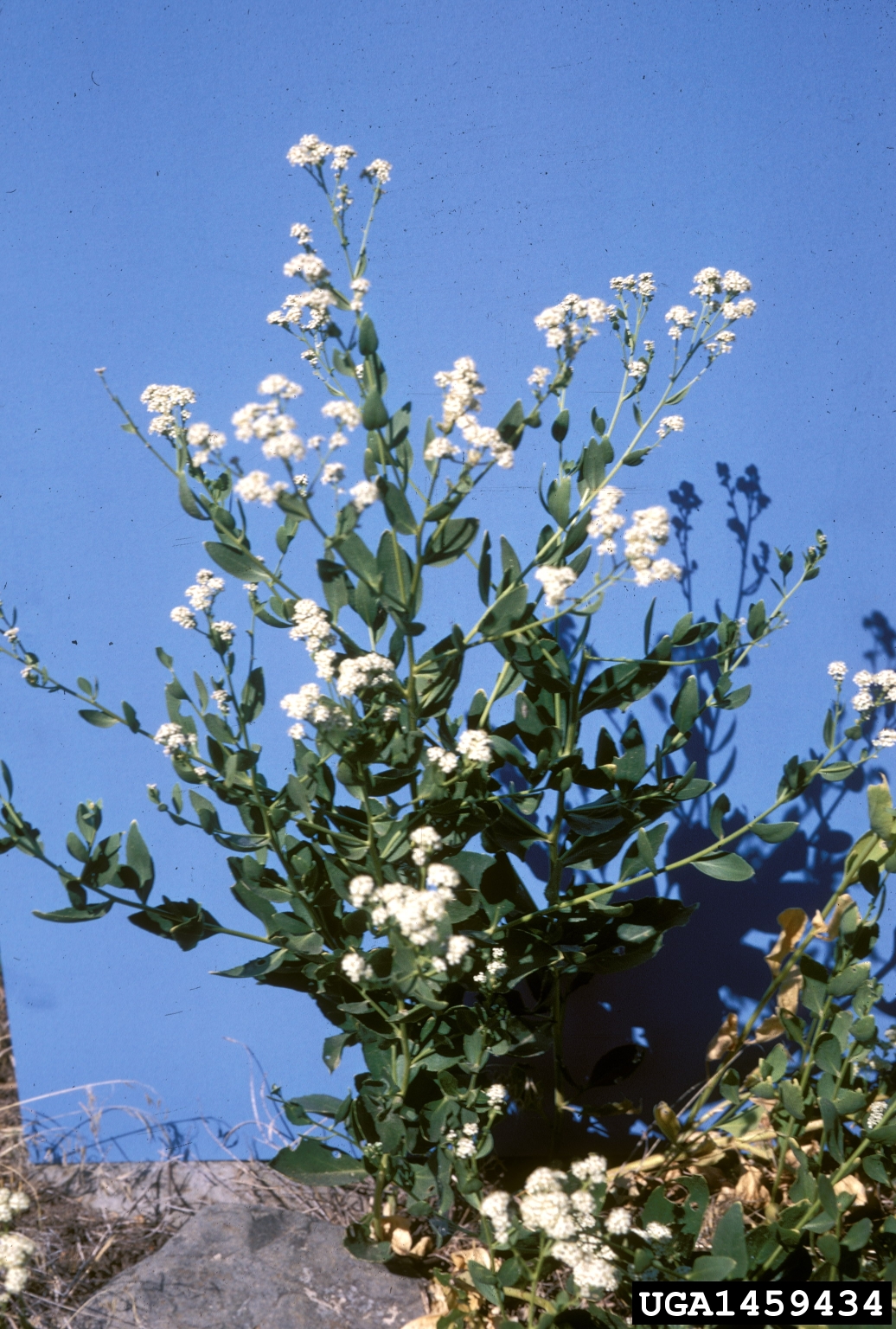
Steve Dewey, Utah State University, Bugwood.org
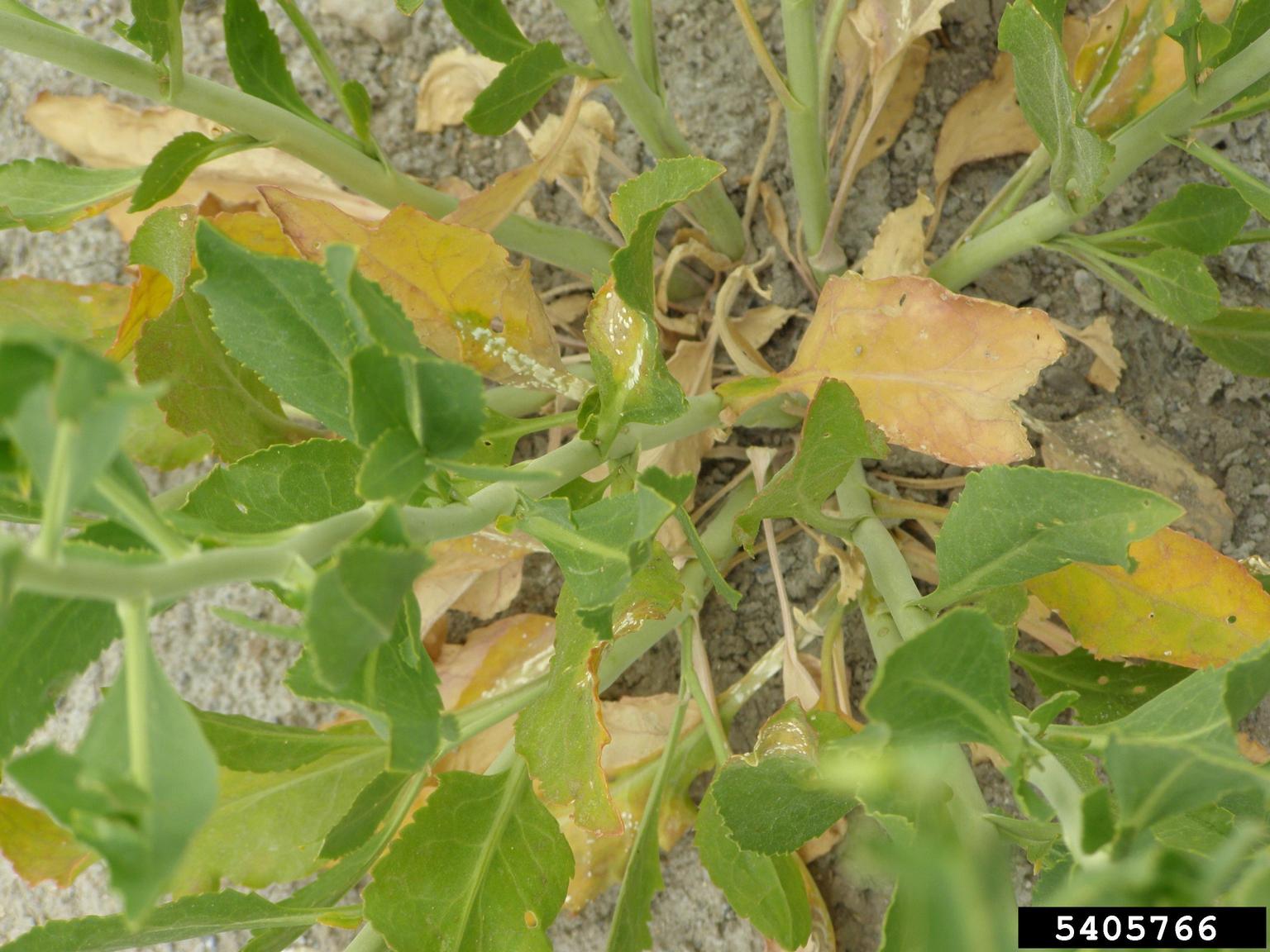
Bonnie Million, Bureau of Land Management, Bugwood.org
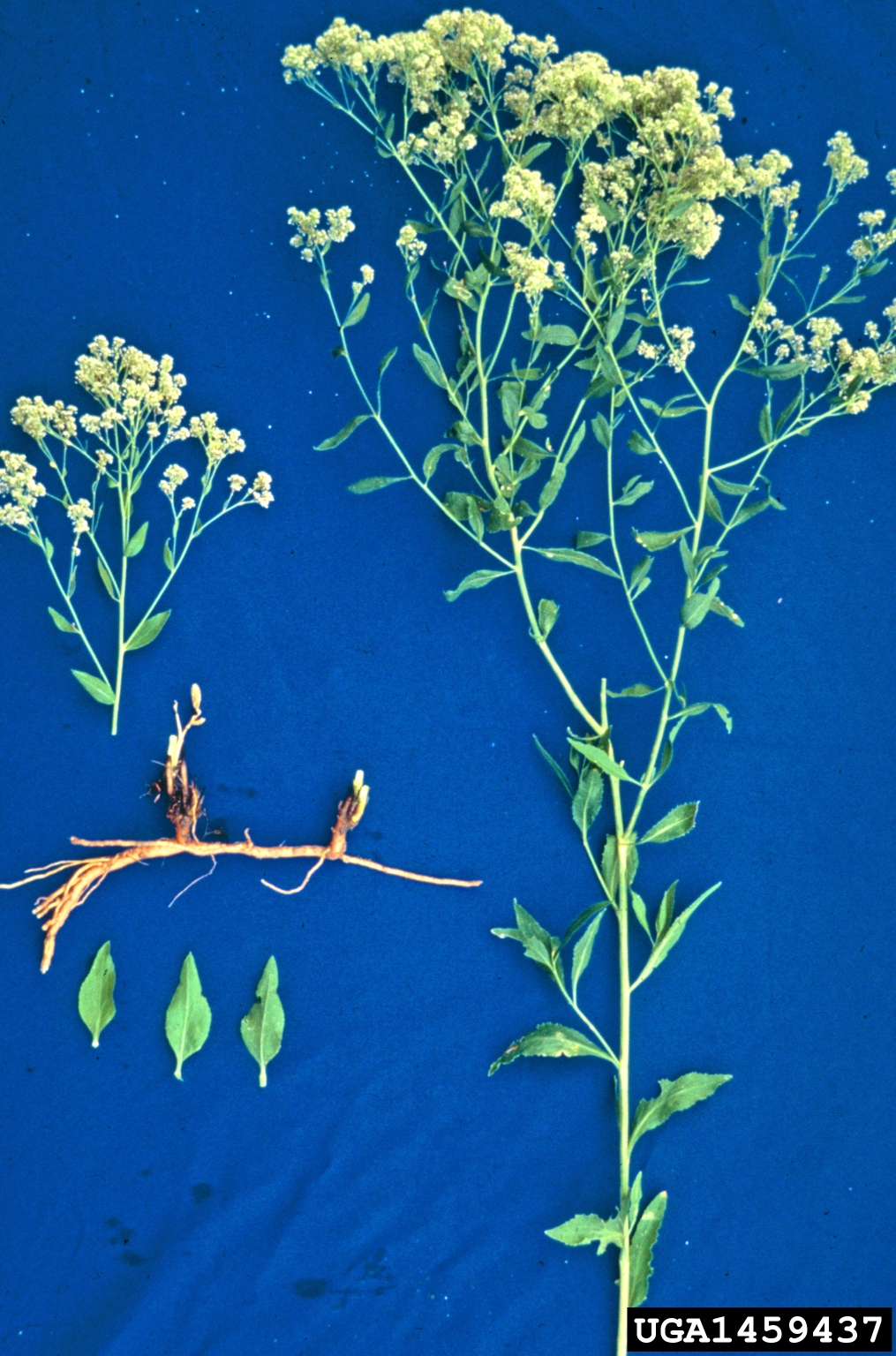
Steve Dewey, Utah State University, Bugwood.org